

The digital revolution has fundamentally transformed how we work, creating unprecedented opportunities for anyone to build profitable online business ideas from anywhere in the world. In 2025, over 5.4 billion people are connected to the internet, and global e-commerce sales are projected to exceed $8 trillion, making online entrepreneurship more accessible and lucrative than ever before.
Whether you’re seeking to escape the 9-to-5 grind, create a sustainable side income, or build a scalable empire, the online business landscape offers pathways for every skill level, budget, and timeline. The key lies in understanding which models align with your unique strengths, resources, and goals—then executing with precision and persistence.
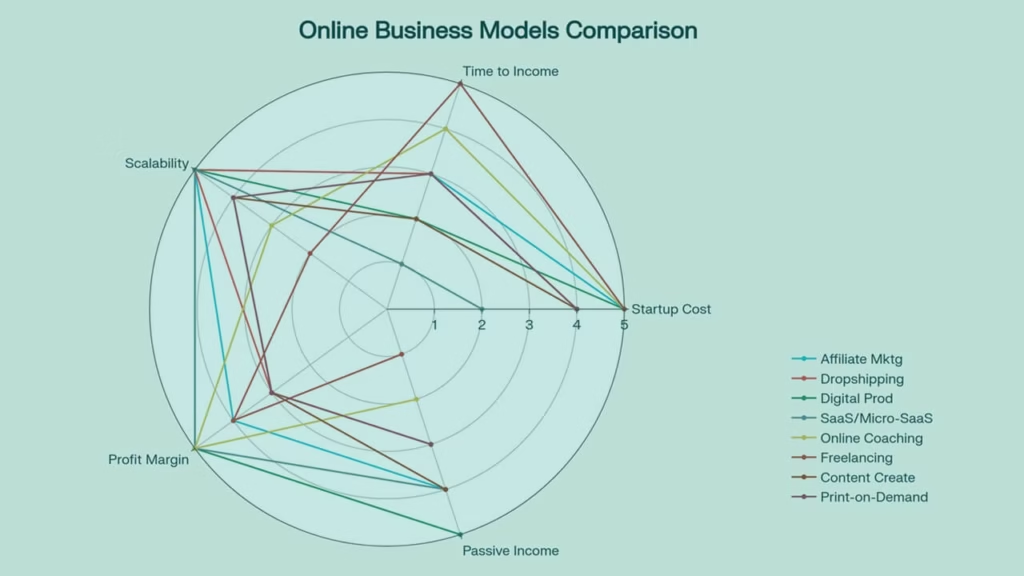
Online Business Model Comparison: Key Performance Metrics
Why Start an Online Business in 2025?
The Digital-First Economy is Here to Stay
The pandemic accelerated digital adoption by nearly a decade, creating permanent shifts in consumer behavior and business operations. Remote work has become the norm for 42% of the U.S. workforce, while consumers increasingly prefer the convenience, personalization, and accessibility of online services. This transformation has created massive gaps in traditional markets that savvy entrepreneurs are filling with innovative online solutions.
Current market trends driving online business growth include:
- AI-powered automation reducing operational complexity and costs
- No-code platforms democratizing software development
- Creator economy boom with over 100 million active creators in India alone
- Subscription model adoption growing 435% over the past decade
- Global accessibility breaking down geographical barriers
Low Barriers, High Rewards
Unlike traditional businesses requiring substantial capital, inventory, and physical infrastructure, online businesses offer remarkable advantages for modern entrepreneurs:
Financial Benefits:
- Minimal startup costs (often under $1,000)
- No inventory requirements for many models
- Global market reach from day one
- Higher profit margins (often 20-90%)
- Scalable revenue potential without proportional cost increases
Operational Advantages:
- Location independence and flexible schedules
- Automated systems reducing manual work
- 24/7 revenue generation potential
- Rapid testing and iteration capabilities
- Multiple income stream opportunities
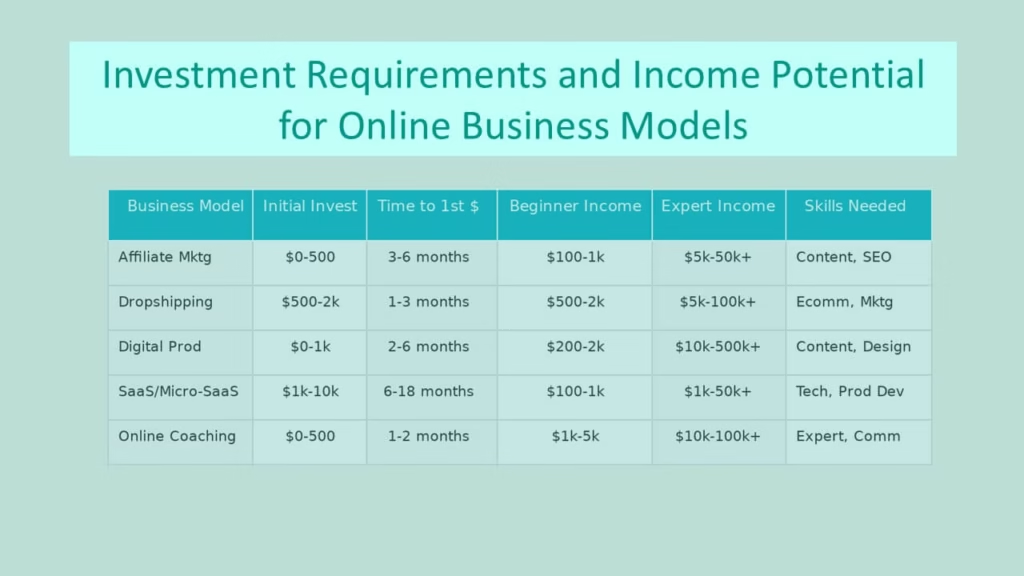
Investment Requirements and Income Potential for Online Business Models
Evergreen Profitable Online Business Ideas and Models
Affiliate Marketing: The Gateway to Online Profits
Affiliate marketing represents one of the most accessible entry points into online entrepreneurship, with the industry accounting for nearly 15% of all digital media revenue. This performance-based model allows you to earn commissions by promoting products you believe in, creating a win-win scenario for creators, brands, and consumers.
How It Works:
You receive unique tracking links from companies and earn a commission (typically 3-50% of sale price) when someone purchases through your link. Success depends on building trust with your audience and choosing products that genuinely solve their problems.
Profit Potential:
- Beginners: $100-1,000 monthly
- Experienced marketers: $5,000-50,000+ monthly
- Top performers: Seven-figure annual incomes
Best For:
- Content creators with engaged audiences
- Bloggers and social media influencers
- Email list builders
- SEO-focused marketers
Getting Started Strategy:
- Choose your niche based on personal interests and market demand
- Select your platform (blog, YouTube, social media, email)
- Join affiliate programs directly or through networks like ShareASale, CJ Affiliate
- Create valuable content that naturally incorporates your recommendations
- Build and nurture your audience with consistent, helpful content
Pros:
- Zero upfront costs
- No product creation required
- Scalable passive income potential
- Global audience reach
Cons:
- Income depends on others’ products and policies
- Requires significant content creation
- Competitive landscape
- Success takes time to build
Dropshipping: E-commerce Without Inventory
Dropshipping has revolutionized e-commerce by eliminating inventory management while maintaining healthy profit margins. The average dropshipping profit margin ranges from 15-20%, with successful operators achieving 30-50% margins on premium products.
Business Model Overview:
You create an online store, market products, and handle customer acquisition. When orders come in, your supplier handles fulfillment directly to the customer. Your profit is the difference between your selling price and the wholesale cost plus fees.
Profit Breakdown Example:
- Product cost: $20
- Your selling price: $35
- Platform fees (3-5%): $1.75
- Marketing costs (20%): $7
- Your profit: $6.25 (18% margin)
Platform Performance:
- Shopify dropshipping: 15-50% margins (average 20-30%)
- Amazon dropshipping: 10-30% margins (average 20%)
- eBay dropshipping: 15-25% margins
Success Requirements:
- Strong marketing and customer acquisition skills
- Product research and trend identification
- Customer service excellence
- Supply chain management
Getting Started:
- Research profitable niches and products
- Find reliable suppliers (Alibaba, domestic wholesalers)
- Set up your e-commerce store (Shopify, WooCommerce)
- Develop marketing strategy (Facebook ads, Google ads, influencer partnerships)
- Optimize for conversions and customer satisfaction
Digital Products: The Ultimate Scalable Business
Digital products represent the holy grail of online businesses due to their incredible scalability and profit margins. Once created, they can be sold infinitely with near-zero marginal costs, often achieving 80-95% profit margins.
High-Demand Digital Product Categories:
Educational Content:
- Online courses: $197-2,997+ price points
- Ebooks: $9.99-99+ depending on value
- Templates and worksheets: $19-199
- Software and tools: $29-999+ monthly
Creative Assets:
- Design templates: $5-50 per template
- Stock photography: $1-25 per image
- Fonts and graphics: $15-150 per pack
- Audio and music: $5-500 per track
Business Tools:
- Spreadsheet templates: $25-197
- Business plans and guides: $97-497
- Automation tools: $29-299 monthly
Revenue Potential:
- Beginner creators: $200-2,000 monthly
- Established experts: $10,000-500,000+ monthly
- Course creators average: $1,000-100,000+ per course
Creation Strategy:
- Identify expertise areas where you can provide unique value
- Validate demand through surveys, keyword research, competitor analysis
- Create minimum viable product (MVP) to test market response
- Build professional presentation with quality design and user experience
- Develop marketing funnel from awareness to purchase to retention
SaaS and Micro-SaaS: Software Success Stories
Software as a Service (SaaS) has become the backbone of modern business, with the global SaaS market projected to reach $600 billion in 2025. While traditional SaaS requires significant investment, micro-SaaS offers an accessible entry point for solo entrepreneurs and small teams.
Micro-SaaS Characteristics:
- Niche-focused solutions solving specific problems
- Small development teams (often 1-3 people)
- Lower development costs ($1,000-10,000 typical investment)
- Recurring revenue model with high customer lifetime value
Revenue Expectations:
- Average micro-SaaS: $1,000-10,000 annually
- Successful micro-SaaS: $10,000-100,000+ annually
- Top performers: $500,000+ annually
Popular Micro-SaaS Ideas:
- Productivity tools for specific industries
- Analytics dashboards for niche markets
- Automation tools for repetitive tasks
- Integrations between existing platforms
Development Approaches:
- No-code platforms: Bubble, Webflow, Zapier
- Low-code solutions: Combining templates with custom code
- Traditional development: For complex features
Online Coaching: Monetizing Your Expertise
Online coaching has emerged as one of the most lucrative knowledge-based businesses, with the global coaching market valued at $15 billion and growing rapidly. Individual coaches routinely earn $3.12M annually on average, with profit margins reaching 80-90%.
Coaching Model Breakdown:
1:1 Coaching:
- Premium pricing: $100-500+ per session
- Package deals: $2,000-20,000+ for multi-month programs
- High profit margins but limited scalability
Group Coaching:
- Mid-tier pricing: $497-2,997 per participant
- Better scalability while maintaining personal touch
- Community building opportunities
Course-Based Coaching:
- Scalable delivery: Serve hundreds simultaneously
- Premium pricing: $497-4,997+ per course
- High passive income potential
Revenue Timeline:
- Month 1-2: First clients and testimonials
- Month 3-6: Consistent monthly income $2,000-10,000
- Month 6-12: Scale to $10,000-50,000+ monthly
Success Factors:
- Clear niche and target audience
- Proven methodology and results
- Strong personal brand and credibility
- Effective sales and marketing systems
Freelancing: Immediate Income from Your Skills
Freelancing offers the fastest path to online income, with skilled freelancers earning within 1-4 weeks of starting. The global freelance market is expected to reach $16.54 billion by 2030, growing at 16.66% CAGR.
High-Demand Freelance Services 2025:
Technology Services:
- AI and machine learning: $50-200+ hourly
- Cybersecurity: $75-300+ hourly
- Web development: $25-150+ hourly
- Data analysis: $40-120+ hourly
Creative Services:
- Video editing: $25-100+ hourly
- Graphic design: $20-80+ hourly
- Copywriting: $30-150+ hourly
- Social media management: $15-75+ hourly
Business Services:
- Digital marketing: $30-200+ hourly
- Virtual assistance: $15-50+ hourly
- Project management: $40-120+ hourly
- Business consulting: $50-500+ hourly
Income Progression:
- Beginner: $500-3,000 monthly
- Intermediate: $3,000-10,000 monthly
- Expert: $10,000-50,000+ monthly
Platform Strategy:
- Upwork: Broad marketplace, competitive pricing
- Fiverr: Package-based services, good for beginners
- Toptal: Premium platform for top talent
- Direct outreach: Highest rates, relationship-based
Emerging and Trending Opportunities in 2025

AI-Powered Service Agencies: The New Gold Rush
Artificial intelligence is creating entirely new business categories, with 95% of firms investing in AI solutions. Smart entrepreneurs are positioning themselves as AI implementation specialists, helping traditional businesses automate and optimize their operations.
High-Opportunity AI Services:
AI Automation Agencies:
- Client acquisition cost reduction: 40% average savings
- Service pricing: $2,000-20,000+ per project
- Recurring maintenance: $500-5,000+ monthly
AI Content Creation:
- Copywriting agencies: $1,000-10,000+ per client monthly
- Video production: $500-5,000+ per project
- Social media management: $800-8,000+ monthly
AI Customer Service:
- Chatbot development: $3,000-30,000+ per implementation
- Voice AI systems: $5,000-50,000+ per deployment
- 24/7 support systems: $1,000-10,000+ monthly recurring
Getting Started:
- Master AI tools (ChatGPT, Claude, Midjourney, etc.)
- Identify service niche based on market gaps
- Build portfolio with case studies and results
- Develop productized offerings for scalability
- Market to SMBs hungry for AI transformation
No-Code Business Opportunities: Building Without Barriers
No-code platforms have democratized software development, enabling anyone to build sophisticated applications without programming knowledge. Successful no-code startups like Comet (€14 million raised) prove the model’s viability.
Profitable No-Code Applications:
Business Tools:
- CRM systems for specific industries
- Project management solutions
- Inventory management for e-commerce
- Booking systems for service businesses
Consumer Applications:
- Dating apps for niche communities
- Fitness tracking for specific activities
- Learning platforms for specialized skills
- Community platforms for interest groups
Revenue Models:
- Monthly subscriptions: $29-299 per user
- One-time purchases: $99-999 per license
- Transaction fees: 1-5% of processed volume
- Premium features: Freemium to paid upgrades
Success Examples:
- Comet: Freelancing marketplace built on Bubble ($800k MRR)
- Qoins: Debt payment app helping users pay $30M+ debt
- Flexiple: $3M+ revenue with $60/month no-code stack
Content Creation Economy: Monetizing Your Voice
Content creation has evolved into a sophisticated business ecosystem, with creators earning through multiple revenue streams simultaneously. The creator economy in India alone exceeded 100 million active creators in 2025.
Platform-Specific Opportunities:
YouTube Monetization (2025 Requirements):
- 500 subscribers minimum (down from 1,000)
- 3,000 watch hours or 3 million Shorts views
- Revenue potential: $0.002-0.025 per view
- Additional income: Channel memberships, Super Chat, merchandise
Podcast Revenue Streams:
- Sponsorships: $18-50 CPM ($25 average)
- Premium subscriptions: 10% conversion at $10/month typical
- Merchandise: 0.5% purchase rate, $30 average sale
- Affiliate marketing: 1-5% conversion rates
Newsletter Monetization:
- Paid subscriptions: $5-50 monthly typical
- Sponsored content: $500-10,000+ per newsletter
- Affiliate commissions: 3-30% of referral sales
- Product sales: 10-50% premium for subscribers
Income Progression Examples:
- 1,000 podcast downloads: $500 monthly potential
- 5,000 podcast downloads: $4,925 monthly potential
- 10,000 podcast downloads: $13,450 monthly potential
Subscription and Membership Models: Recurring Revenue Mastery
Subscription businesses are growing 5x faster than traditional companies, with the global subscription economy expected to reach $1.5 trillion by 2025. This model provides predictable revenue and higher customer lifetime values.
High-Converting Subscription Ideas:
Knowledge-Based Memberships:
- Industry insights: $29-297 monthly
- Skill development: $19-99 monthly
- Professional networks: $50-500 monthly
Product Subscriptions:
- Eco-friendly products: $25-75 monthly
- Niche fitness: $29-199 monthly
- Specialty foods: $35-150 monthly
Service Subscriptions:
- Business tools: $29-299 monthly
- Personal development: $19-97 monthly
- Creative resources: $15-149 monthly
Success Metrics:
- Average membership revenue: $200-5,000 monthly per site
- Top membership sites: $10,000+ monthly
- Customer retention: 80-95% for valuable content
Print-on-Demand: Creative Freedom with Minimal Risk
Print-on-demand combines creativity with e-commerce while eliminating inventory risk. Profit margins typically range from 20-40%, with some products achieving up to 76% markup.
Product Categories and Margins:
- Apparel: 20-40% profit margins
- Home decor: 30-50% margins
- Stationery: 40-76% margins
- Accessories: 25-45% margins
Platform Performance:
- Etsy: Higher margins, niche audiences
- Amazon: Large volume, lower margins
- Shopify: Full control, higher effort required
- Redbubble: Easy setup, platform handles marketing
Revenue Expectations:
- Beginners: $200-1,500 monthly
- Experienced sellers: $2,000-20,000+ monthly
- Top performers: Six-figure annual incomes
Success Strategy:
- Research trending niches and evergreen topics
- Create unique designs that resonate with target audiences
- Optimize listings with relevant keywords and attractive mockups
- Test multiple products to find profitable winners
- Scale successful designs across multiple platforms
Profitability Analysis and Business Model Selection

Understanding Profit Margins Across Models
Profit margin expectations vary significantly across different online business models, influenced by factors like scalability, competition, and value proposition.
Profit Margin Hierarchy:
Highest Margins (60-95%):
- Digital products: Near-zero marginal costs
- Online coaching: Knowledge-based, high perceived value
- SaaS/Software: Scalable with subscription revenue
High Margins (40-70%):
- Affiliate marketing: No product costs, pure commissions
- Print-on-demand premium: Unique designs command premiums
- Content creation: Monetizing existing audiences
Moderate Margins (20-40%):
- Dropshipping: Competitive but scalable
- Print-on-demand standard: Mass market pricing
- Freelance services: Time-based limitations
Investment Requirements and Timeline Analysis
Understanding the investment-to-income timeline helps entrepreneurs choose models aligned with their financial situation and goals.
Low Investment, Fast Returns:
- Freelancing: $0-200 investment, 1-4 weeks to income
- Affiliate marketing: $0-500 investment, 3-6 months to significant income
- Online coaching: $0-500 investment, 1-2 months to first clients
Moderate Investment, Medium Timeline:
- Dropshipping: $500-2,000 investment, 1-3 months to sales
- Print-on-demand: $0-500 investment, 2-4 months to momentum
- Content creation: $100-2,000 investment, 3-12 months to monetization
Higher Investment, Longer Timeline:
- SaaS/Micro-SaaS: $1,000-10,000 investment, 6-18 months to revenue
- Digital products: $0-1,000 investment, 2-6 months to launch
Risk Assessment and Mitigation
Every online business model carries inherent risks that entrepreneurs must understand and mitigate.
Common Risk Factors:
- Market saturation: Choose underserved niches
- Platform dependency: Diversify traffic sources
- Income volatility: Build multiple revenue streams
- Technical challenges: Start simple, scale complexity
- Competition: Focus on unique value propositions
Risk Mitigation Strategies:
- Start lean with minimal viable products
- Validate demand before major investments
- Diversify income sources across models and platforms
- Build email lists to own customer relationships
- Create valuable content to establish authority and trust
Choosing the Right Business Model for You
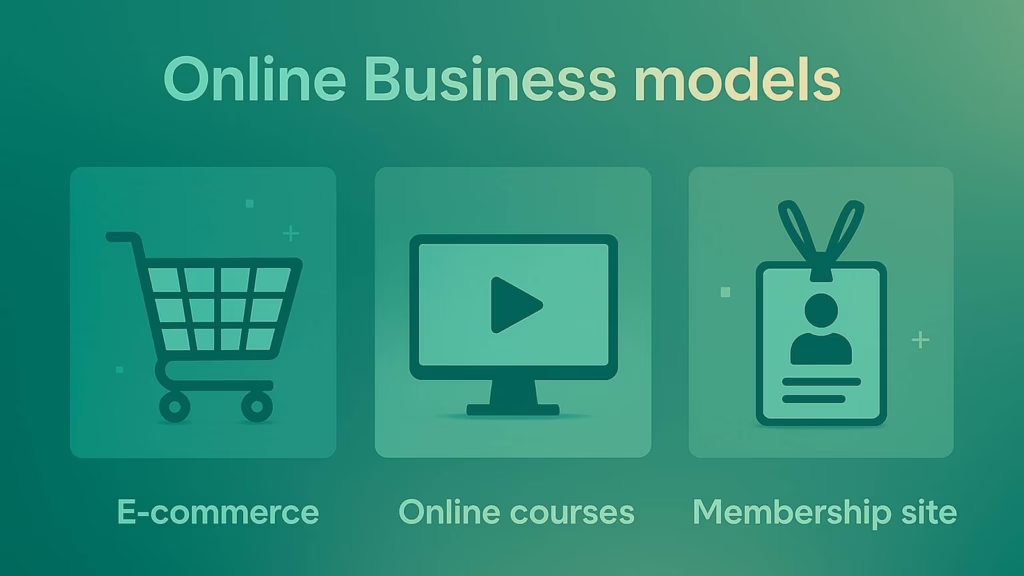
Self-Assessment Framework
Selecting the optimal business model requires honest self-evaluation across multiple dimensions. The most successful entrepreneurs choose models that align with their strengths, resources, and goals rather than chasing the “hottest” opportunities.
Critical Assessment Areas:
Financial Resources:
- Available capital: $0-100 (limited), $100-1K (moderate), $1K+ (flexible)
- Risk tolerance: Conservative, moderate, aggressive
- Income timeline: Immediate need, 3-6 months, 6+ months acceptable
Skills and Experience:
- Technical abilities: Beginner, intermediate, advanced
- Marketing knowledge: None, basic, experienced
- Content creation: Weak, average, strong
- Communication skills: Poor, good, excellent
Time and Commitment:
- Available hours weekly: 5-10 (part-time), 10-20 (significant), 20+ (full-time)
- Long-term vision: Side income, replacement income, build empire
- Learning appetite: Low, moderate, high
Model-to-Profile Matching
Based on comprehensive research and success patterns, certain business models align better with specific entrepreneur profiles.
For Budget-Conscious Beginners:
- Primary choice: Freelancing (immediate income, skill-based)
- Secondary: Affiliate marketing (low cost, scalable)
- Growth path: Content creation to build audience
For Tech-Savvy Entrepreneurs:
- Primary choice: Micro-SaaS (high margins, recurring revenue)
- Secondary: No-code applications (faster development)
- Growth path: Scale to full SaaS platform
For Creative Professionals:
- Primary choice: Digital products (monetize creativity directly)
- Secondary: Print-on-demand (visual designs)
- Growth path: Online courses teaching creative skills
For Knowledge Workers:
- Primary choice: Online coaching (premium pricing)
- Secondary: Digital courses (scalable)
- Growth path: Membership community
For Marketing-Savvy Individuals:
- Primary choice: Content creation (leverage marketing skills)
- Secondary: Dropshipping (marketing-driven)
- Growth path: Multiple content platforms and products
Success Factors and Common Pitfalls
Regardless of chosen model, certain principles determine success across all online businesses.
Universal Success Factors:
- Customer obsession: Solve real problems with genuine value
- Consistent execution: Regular action beats perfect planning
- Data-driven decisions: Track metrics and optimize continuously
- Long-term thinking: Build sustainable systems, not quick fixes
- Continuous learning: Adapt to changing markets and technologies
Critical Pitfalls to Avoid:
- Perfectionism paralysis: Launch imperfect products and improve iteratively
- Shiny object syndrome: Focus on one model until profitable
- Ignoring validation: Test demand before building
- Underpricing: Value your expertise and time appropriately
- Neglecting systems: Build processes for scalability from day one
Business Model Assessment Worksheet
Business Model Recommendations
Action Plan: From Idea to Income

16-Week Launch Framework
Success in online business requires systematic execution rather than sporadic effort. This proven framework has helped thousands of entrepreneurs transition from idea to income systematically.
Phase 1: Research and Foundation (Weeks 1-2)
- Conduct thorough market research and competitor analysis
- Identify target audience and validate demand
- Choose business model based on assessment
- Set up basic business infrastructure (email, banking, legal)
Phase 2: Validation and Planning (Weeks 3-4)
- Test market demand through surveys and interviews
- Validate pricing through customer feedback
- Create detailed business plan and financial projections
- Secure necessary tools and software
Phase 3: Build and Prepare (Weeks 5-8)
- Develop minimum viable product or service
- Create website and basic marketing materials
- Set up analytics and tracking systems
- Build initial content and marketing assets
Phase 4: Launch and Acquire (Weeks 9-10)
- Go live with product or service offering
- Execute marketing plan to acquire first customers
- Gather customer feedback and testimonials
- Begin building email list and social media presence
Phase 5: Optimize and Improve (Weeks 11-16)
- Analyze performance data and customer feedback
- Optimize conversion rates and customer experience
- Refine product offering based on market response
- Scale successful marketing channels
Phase 6: Scale and Grow (Month 4+)
- Expand product line or service offerings
- Increase marketing investment in proven channels
- Automate repetitive processes
- Consider strategic partnerships and collaborations
Conclusion: Your Path to Online Business Success
The online business landscape in 2025 offers unprecedented opportunities for entrepreneurs willing to combine strategic thinking with consistent execution. With over $8 trillion in global e-commerce sales and 5.4 billion internet users, the market has never been larger or more accessible.
Key success principles for your journey:
Start with Strategy, Not Tactics: Choose a business model that aligns with your skills, resources, and goals rather than chasing trends. The most profitable business is the one you can execute consistently and scale systematically.
Focus on Value Creation: Every successful online business solves real problems for real people. Your primary job is to create value, not just make money. When you focus on helping others achieve their goals, financial success follows naturally.
Embrace the Learning Process: Online business success requires continuous adaptation and improvement. Treat failures as data, not defeats, and use every experience to refine your approach.
Think Systems, Not Just Sales: Build scalable processes from day one. The difference between a job and a business is systems. Create repeatable processes that can operate and grow without your constant involvement.
Diversify and Optimize: Don’t put all your eggs in one basket. Multiple revenue streams and traffic sources provide stability and growth opportunities. Once one model works, expand strategically to related opportunities.
The digital economy is still in its early stages, with AI, automation, and global connectivity creating new possibilities daily. Whether you choose affiliate marketing for its low barrier to entry, SaaS for its recurring revenue potential, or content creation for its long-term asset building, success comes down to choosing a model that fits your situation and executing it with excellence.
Your online business journey starts with a single step. Use the assessment tools, comparison charts, and action plans provided in this guide to make an informed decision, then commit fully to your chosen path. The most successful online entrepreneurs aren’t the ones with the perfect idea—they’re the ones who start, learn, adapt, and persist until they achieve their goals.
The internet has democratized opportunity like never before in human history. Your age, location, background, or current situation don’t determine your potential for online business success. What matters is your willingness to learn, your commitment to creating value, and your persistence in pursuing your vision.
Take action today. Choose your model, complete your assessment, and begin your 16-week journey to online business success. The only thing standing between you and financial freedom is your decision to start.
Ready to begin? Download the complete business model assessment worksheet, recommendations guide, and launch action plan to turn your online business dreams into reality.