

Starting an online business doesn’t have to drain your savings or require a massive upfront investment—if you’ve ever wondered how much money do I need to start an online business, the answer might surprise you. The myth that you need thousands of rupees to launch successfully keeps many aspiring entrepreneurs from pursuing their dreams, while the opposite myth—that online businesses are completely free—sets unrealistic expectations that lead to underfunded failures.
The reality is nuanced and empowering: you can start a legitimate online business with as little as ₹0-₹2,500 for basic models, ₹2,000-₹15,000 for lean startups, or ₹20,000-₹100,000+ for full-featured operations. The key lies in understanding which expenses are truly essential versus nice-to-have, matching your budget to the right business model, and planning for sustainable growth rather than overnight success.
The Myth vs. Reality of Online Business Startup Costs

Debunking Common Misconceptions
Myth #1: “Online businesses are completely free to start”
While some business models require minimal upfront investment, truly sustainable online businesses need strategic financial planning. Free platforms often come with limitations that can hamper growth, and you’ll eventually need to invest in professional tools, marketing, and legal compliance to compete effectively.
Myth #2: “You need ₹50,000+ to start any real business”
Traditional brick-and-mortar businesses do require substantial capital, but online models dramatically reduce barriers to entry. Service-based businesses, affiliate marketing, and dropshipping can launch with minimal investment while still generating substantial revenue.
Myth #3: “Cheap means unprofessional”
Strategic bootstrapping using free trials, open-source tools, and gradual scaling can create professional results without breaking the bank. Many successful entrepreneurs started lean and reinvested profits to upgrade their operations.
Why Understanding Costs Matters
Smart budgeting serves multiple critical purposes beyond just financial planning. It helps prevent the 47% of small businesses that fail due to inadequate funding, enables you to secure appropriate financing, and creates realistic timelines for profitability. Understanding costs also helps you identify which business models align with your current financial situation and risk tolerance.
More importantly, proper cost planning allows you to focus on revenue-generating activities rather than constantly worrying about unexpected expenses. When you know exactly how much you need and why, you can make confident decisions about tool purchases, marketing investments, and scaling opportunities.
Startup Expenses Breakdown: How Much Money Do I Need To Start an Online Business
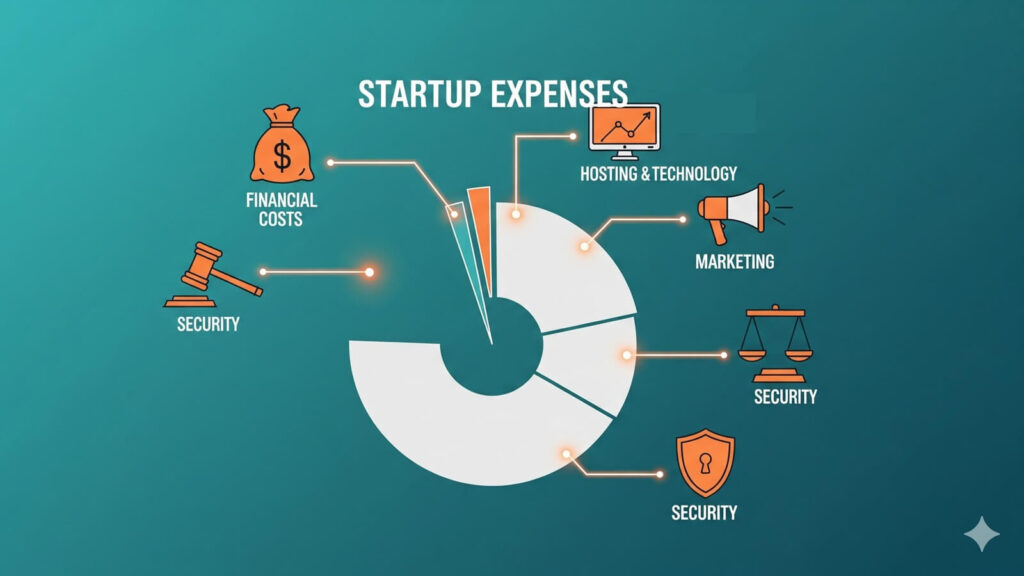
Must-Have Foundation Costs
Every legitimate online business requires certain fundamental infrastructure, regardless of size or model. These essential expenses form the backbone of your operations and should be prioritized in any budget.
Domain and Hosting
Your online presence starts with a domain name and reliable hosting. Domain registration costs ₹500-₹2,000 annually for standard extensions like .com or .in. Hosting varies dramatically: shared hosting starts at ₹60-₹400 monthly, while VPS hosting ranges ₹300-₹2,000 monthly, and dedicated hosting can cost ₹4,000-₹15,000+ monthly.
Website Development
Basic website creation can range from ₹0 using free platforms with limitations to ₹75,000+ for custom e-commerce sites. WordPress with WooCommerce offers middle-ground solutions around ₹3,000-₹8,000 annually including themes and essential plugins. Professional design services add ₹5,000-₹50,000 depending on complexity and customization requirements.
Payment Processing
Online businesses need secure payment acceptance. Personal PayPal accounts work for minimal operations, while professional payment gateways like Stripe or Razorpay charge 2.9% + ₹30 per transaction with setup fees ranging ₹0-₹5,000. Indian businesses may need additional banking setup costs of ₹1,000-₹3,000.
Legal and Compliance
Business registration varies by structure: sole proprietorships may require minimal fees of ₹0-₹500, while private limited companies need ₹7,000-₹15,000 including government fees, digital signatures, and director identification numbers. Professional legal services add ₹15,000-₹25,000 for comprehensive setup.
Software and Tools Infrastructure
Modern online businesses rely heavily on software tools that can dramatically impact both efficiency and costs. The key is starting with essential free versions and upgrading strategically as revenue grows.
Communication and Productivity
Free alternatives like Gmail, Google Drive, and Slack cover basic needs initially. Professional upgrades cost ₹500-₹2,000 monthly for comprehensive business suites including advanced security, custom domains, and enhanced collaboration features.
Marketing and Analytics
Basic SEO tools, social media schedulers, and email marketing start free but scale to ₹2,000-₹10,000 monthly for advanced features like automation, detailed analytics, and A/B testing capabilities. Customer relationship management (CRM) systems range from free basic plans to ₹3,000-₹15,000 monthly for enterprise solutions.
E-commerce Platforms
Platform costs vary significantly: Shopify starts at ₹2,000 monthly, WooCommerce is free but requires hosting, while custom development can cost ₹75,000-₹300,000+. Transaction fees typically range 2-3% of sales, creating ongoing revenue-based costs that scale with success.
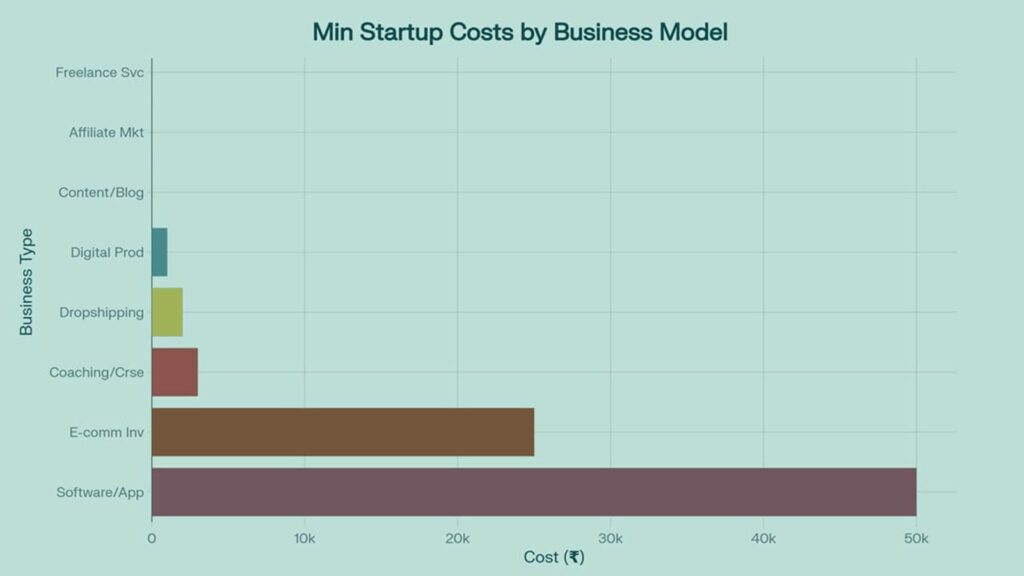
Minimum startup costs for different online business models in India (2025)
Budget Scenarios: Three Approaches to Starting Smart
Shoestring Budget: ₹0-₹2,500 Total Investment
This ultra-lean approach proves you can start a legitimate business with minimal capital while maintaining professional standards. Success requires sweat equity, creativity, and strategic use of free resources.
Free Website Solutions
WordPress.com, Wix, or even social media pages can serve as initial storefronts. While limited in customization, these platforms provide essential functionality for testing business concepts and generating first sales. Free hosting through platforms like 000webhost or Netlify can handle basic sites with reasonable traffic.
Bootstrap Marketing Strategies
Organic social media marketing, content creation, SEO optimization, and community engagement cost only time and effort. Email marketing through free Mailchimp plans, social media scheduling with Hootsuite free tiers, and basic graphic design using Canva provide professional capabilities without monetary investment.
Service-Based Business Models
Freelancing, consulting, tutoring, and digital services require minimal upfront investment since you’re primarily selling knowledge and skills rather than products. Your existing computer and internet connection become your primary business assets.
Revenue Potential and Limitations
Shoestring businesses can generate ₹10,000-₹50,000+ monthly revenue, but growth may be limited by platform restrictions, time constraints, and lack of professional tools. The key is using early profits to gradually upgrade infrastructure and capabilities.
Lean Startup: ₹2,000-₹15,000 Investment
This balanced approach provides professional foundation while maintaining cost efficiency. It’s ideal for entrepreneurs who want to establish credibility quickly while having room for strategic growth investments.
Professional Web Presence
Custom domain (₹1,500-₹3,000 annually) with reliable hosting (₹3,000-₹6,000 annually) creates professional credibility. Premium themes (₹2,000-₹8,000) and basic branding (₹500-₹2,000) enhance visual appeal and user experience.
Essential Tool Stack
Professional email marketing (₹1,000-₹3,000 annually), basic CRM (₹3,000-₹6,000 annually), and accounting software (₹1,000-₹3,000 annually) provide operational efficiency. Cloud storage, backup solutions, and basic security measures add ₹2,000-₹5,000 annually.
Strategic Marketing Budget
₹2,000-₹8,000 for initial content creation, basic SEO tools, and small-scale paid advertising campaigns. This budget allows for testing different marketing channels and measuring return on investment before scaling successful strategies.
Growth and Scalability
Lean startups typically achieve profitability within 3-6 months and can scale to ₹100,000+ monthly revenue. The professional foundation supports rapid growth when market demand is proven, making it easier to secure additional funding or reinvest profits effectively.
Full-Featured Approach: ₹20,000-₹100,000+ Investment
This comprehensive approach is suitable for entrepreneurs who want to launch with maximum credibility, advanced functionality, and immediate competitive advantage in established markets.
Custom Development and Design
Professional website development (₹75,000-₹300,000+), custom branding packages (₹25,000-₹100,000+), and specialized functionality create distinctive market positioning. Advanced e-commerce features, mobile apps, and integration capabilities provide competitive advantages.
Advanced Marketing Infrastructure
Comprehensive marketing automation (₹10,000-₹25,000 monthly), professional content creation (₹15,000-₹50,000 monthly), and substantial advertising budgets (₹25,000-₹100,000+ monthly) enable rapid market penetration and brand building.
Professional Services and Support
Legal counsel, accounting services, business consultants, and specialized contractors provide expertise and operational support. These services typically cost ₹50,000-₹200,000 annually but can prevent costly mistakes and accelerate growth.
Enterprise-Level Tools and Infrastructure
Advanced analytics, cybersecurity measures, customer service platforms, and enterprise software provide scalability and operational excellence. Monthly software costs can range ₹15,000-₹40,000 but support high-volume operations and sophisticated business processes.
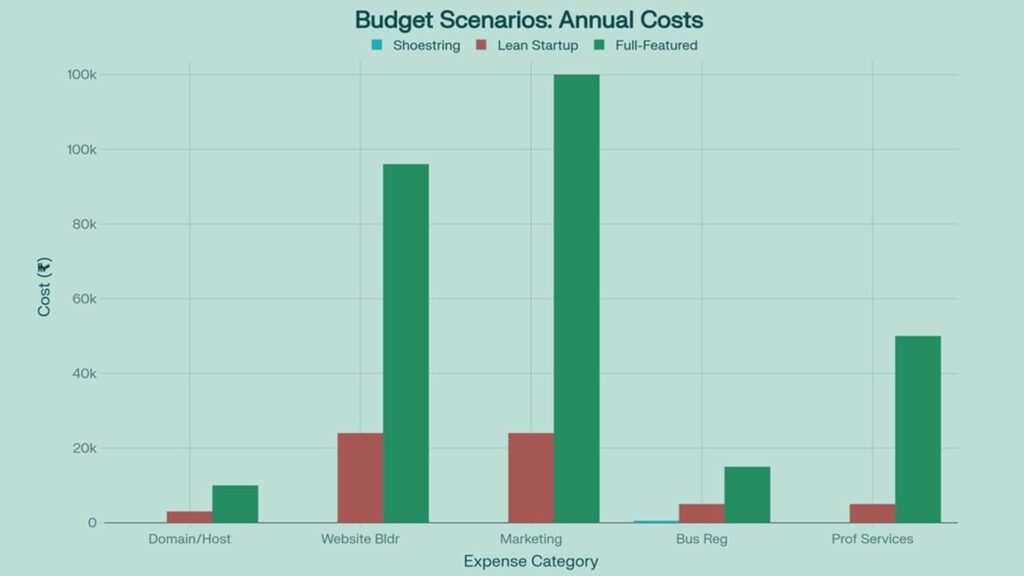
Annual cost comparison across three startup budget scenarios for key expense categories
Business Model-Specific Cost Analysis
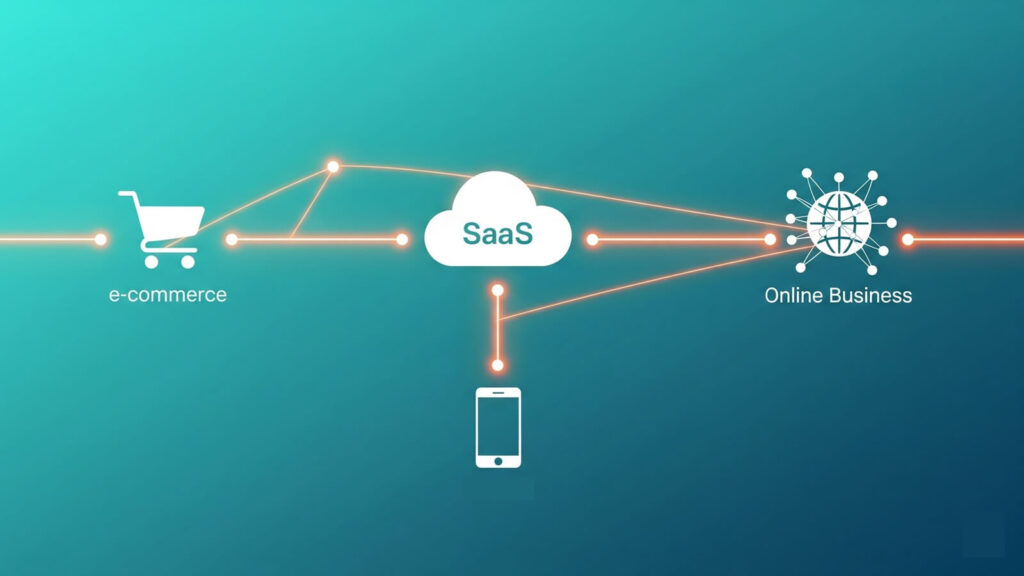
Service-Based Businesses: Minimal Investment, Maximum Flexibility
Service-based models offer the lowest barrier to entry while maintaining high profit potential. Your existing skills, knowledge, and experience become your primary business assets, requiring minimal external investment.
Freelancing and Consulting
Startup costs range ₹0-₹25,000 depending on specialization and target market. Essential expenses include professional website (₹3,000-₹15,000), portfolio development (₹0-₹10,000), and basic business registration (₹1,000-₹15,000). Advanced setups might include industry certifications (₹5,000-₹50,000) and professional insurance (₹3,000-₹15,000 annually).
Online Tutoring and Coaching
Educational services require minimal infrastructure: reliable internet, quality webcam/microphone (₹5,000-₹25,000), and learning management platform subscriptions (₹2,000-₹8,000 monthly). Content creation tools and course development platforms add ₹5,000-₹25,000 for comprehensive programs.
Digital Services and Creative Work
Design, writing, development, and creative services need specialized software and tools. Adobe Creative Suite, professional development environments, and project management tools cost ₹10,000-₹50,000 annually. High-end equipment for photography, videography, or audio production can add ₹50,000-₹500,000+ for professional quality.
E-commerce and Product Sales
Product-based businesses require more complex planning and higher upfront investments, but offer greater scalability and passive income potential.
Dropshipping Operations
Dropshipping minimizes inventory risk while providing e-commerce experience. Total startup costs range ₹20,000-₹50,000 in India, including Shopify subscription (₹2,000 monthly), marketing budget (₹8,000-₹10,000 monthly), product sampling (₹5,000-₹15,000), and business setup (₹3,000-₹10,000).
Inventory-Based E-commerce
Traditional e-commerce requires substantial inventory investment: ₹25,000-₹100,000+ for initial stock, depending on product category and target market size. Additional costs include storage solutions (₹5,000-₹25,000 monthly), packaging materials (₹2,000-₹10,000 monthly), and logistics partnerships (₹5,000-₹20,000 setup plus per-shipment fees).
Digital Products and Courses
Digital product creation costs ₹1,000-₹7,000 for basic setups, primarily software and platforms. Advanced productions might require professional recording equipment (₹25,000-₹100,000+), editing software (₹10,000-₹50,000 annually), and course hosting platforms (₹3,000-₹15,000 monthly). Content creation and marketing typically represent ongoing costs rather than upfront investments.
Content and Affiliate Marketing
Content-based businesses offer low startup costs with potential for significant passive income, but require consistent effort and patience to achieve profitability.
Blogging and Content Creation
Basic blogging setup costs ₹0-₹2,500: free WordPress.com or medium.com accounts require no investment. Professional blogs need domain and hosting (₹2,000-₹5,000 annually), premium themes (₹3,000-₹15,000), and content creation tools (₹5,000-₹25,000 annually). Monetization through advertisements, sponsorships, and affiliate marketing provides revenue streams that scale with audience size.
Affiliate Marketing Programs
Pure affiliate marketing has minimal startup costs: website development (₹0-₹15,000), content creation tools (₹0-₹10,000), and traffic generation strategies (₹5,000-₹50,000+ for paid advertising). Success depends on audience building, content quality, and strategic promotion rather than upfront capital investment.
Social Media and Influencer Marketing
Social media businesses can start completely free using existing platforms. Professional growth requires content creation equipment (₹10,000-₹100,000+), editing software (₹5,000-₹25,000 annually), and potential advertising spend (₹5,000-₹50,000+ monthly). Revenue comes from sponsorships, affiliate commissions, and product sales to engaged audiences.
Must-Have vs. Nice-to-Have: Smart Prioritization
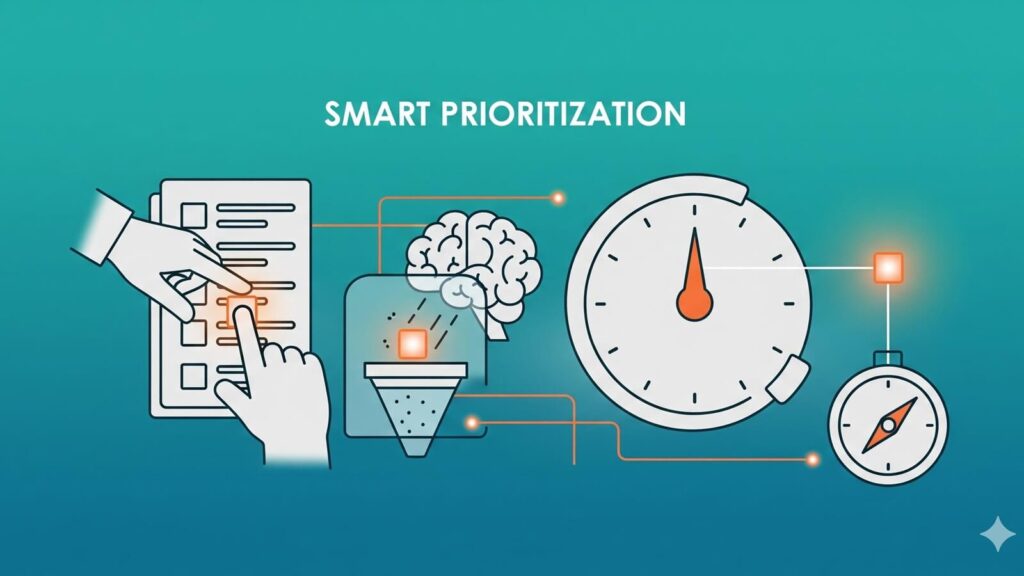
Critical Infrastructure You Can’t Skip
Understanding the difference between essential and optional expenses prevents both underfunding critical needs and overspending on premature upgrades. Smart prioritization ensures your limited budget focuses on revenue-generating capabilities.
Domain and Basic Hosting
Professional credibility requires your own domain name and reliable hosting. Free subdomains (yourname.wordpress.com) immediately signal amateur status to potential customers. The ₹2,000-₹5,000 annual investment in proper domain and hosting pays for itself through increased conversion rates and professional perception.
Secure Payment Processing
Your ability to receive payments directly impacts revenue generation. Personal PayPal accounts work initially, but professional payment gateways provide better security, lower fees, and enhanced customer trust. The ₹0-₹5,000 setup cost enables immediate sales capability.
Legal Business Registration
Operating legally protects both your business and personal assets while enabling access to business banking, contracts, and professional services. Registration costs (₹1,000-₹15,000) are mandatory rather than optional for sustainable operations.
Basic Website or Landing Page
Your online presence serves as your 24/7 salesperson and credibility indicator. While free platforms work initially, professional design (₹5,000-₹25,000) significantly impacts conversion rates and customer perception.
Strategic Upgrades for Growth
These expenses enhance operations and accelerate growth but aren’t required for initial launch. Smart entrepreneurs start without them and upgrade strategically as revenue grows.
Premium Design and Branding
Professional logos, custom graphics, and branded materials improve market positioning but cost ₹10,000-₹100,000+. Starting with DIY solutions and upgrading when revenue justifies the investment makes financial sense for most businesses.
Advanced Marketing Tools
Sophisticated automation, analytics, and customer management tools offer competitive advantages but aren’t essential for early-stage operations. Monthly costs of ₹5,000-₹25,000+ should be justified by demonstrated return on investment.
Professional Photography and Content
High-quality visuals improve conversion rates and brand perception but represent significant investment (₹25,000-₹100,000+). Starting with smartphone photography and DIY content, then upgrading based on performance metrics, optimizes resource allocation.
Coworking Space and Office Setup
Physical workspace enhances productivity and professional image but costs ₹10,000-₹50,000+ monthly. Remote work capabilities should be maximized before committing to fixed overhead expenses.
The 80/20 Rule for Startup Expenses
Focus 80% of your budget on the 20% of expenses that directly generate revenue: payment processing, basic website, essential marketing, and core business functionality. The remaining 20% can address nice-to-have items that improve efficiency or appearance but don’t directly impact sales capability.
This prioritization ensures you can start generating revenue quickly, then reinvest profits into operational improvements and growth acceleration. Many successful entrepreneurs start with minimal budgets, focusing intensely on customer acquisition and satisfaction before investing in premium tools and services.
Real-World Case Studies and Examples

Sarah’s Etsy Success Story: ₹2,000 Investment
Sarah launched her handcrafted jewelry business with a minimal investment strategy that demonstrates smart resource allocation and organic growth principles.
Initial Investment Breakdown
- Basic photography setup: ₹800 (smartphone mount, lighting)
- Etsy listing fees and initial inventory: ₹500
- Simple logo design tool subscription: ₹300
- Packaging materials: ₹400
- Total startup cost: ₹2,000
Within three months, Sarah generated ₹25,000 in sales by focusing on product quality, customer service, and organic social media marketing. She reinvested profits into expanded inventory, professional photography, and eventually her own e-commerce website. By year-end, her business generated ₹200,000+ annually while maintaining lean operations.
Key Success Factors
Sarah’s success demonstrates how minimal investment paired with strategic execution can create substantial returns. She prioritized product development and customer satisfaction over expensive marketing tools, letting satisfied customers drive organic growth through referrals and social media sharing.
Raj’s Coaching Website: ₹8,000 Setup
Raj transitioned from corporate employment to independent business coaching using a lean startup approach that balanced professional credibility with cost efficiency.
Professional Foundation Investment
- Domain and hosting for 2 years: ₹3,500
- WordPress premium theme: ₹2,000
- Business registration and legal setup: ₹1,500
- Professional headshots and basic branding: ₹1,000
- Total startup cost: ₹8,000
Monthly Operating Costs
- Email marketing platform: ₹800
- Video conferencing software: ₹500
- CRM and scheduling tools: ₹1,200
- Monthly operational cost: ₹2,500
Raj achieved profitability within two months by leveraging his existing professional network and providing immediate value through free consultations that converted to paid engagements. His professional website and systematic approach enabled premium pricing (₹5,000-₹15,000 per consultation) that quickly recovered startup investments.
Priya’s Dropshipping Journey: ₹35,000 Investment
Priya’s dropshipping venture illustrates the higher investment requirements for product-based businesses while demonstrating scalability potential.
Comprehensive Launch Strategy
- Shopify subscription and premium theme: ₹8,000 (first 6 months)
- Product sampling and quality testing: ₹5,000
- Initial marketing and advertising budget: ₹15,000
- Business registration and payment gateway setup: ₹3,000
- Logo design and basic branding: ₹2,000
- Emergency fund for unexpected costs: ₹2,000
- Total startup investment: ₹35,000
Results and Scaling
Within six months, Priya’s store generated ₹150,000 in sales with ₹45,000 profit after product costs, advertising, and operational expenses. The higher initial investment enabled professional presentation, effective advertising campaigns, and strategic inventory testing that identified winning products quickly.
Lessons Learned
Priya’s experience highlights the importance of adequate marketing budgets for product-based businesses. Her success came from systematic testing of products, audiences, and advertising approaches rather than gambling on single product launches.

Business startup and monthly overhead expenses template showing detailed budget categories and cost estimates for planning
Smart Budgeting Tips for Online Entrepreneurs

Start Small, Scale Smart Strategy
The most successful online entrepreneurs follow a disciplined approach to resource allocation that minimizes risk while maximizing learning opportunities and growth potential.
The MVP (Minimum Viable Product) Approach
Launch with the smallest possible feature set that provides customer value, then enhance based on actual user feedback rather than assumptions. This approach reduces initial investment while providing real market validation for future development decisions.
Revenue-Based Scaling
Use actual sales revenue to fund business improvements rather than borrowing or over-investing initially. This organic growth approach ensures each upgrade is justified by demonstrated business value and sustainable cash flow.
The Three-Month Rule
Budget for at least three months of operating expenses without revenue to provide adequate runway for business development, customer acquisition, and initial market traction. This buffer prevents premature shutdown due to temporary cash flow challenges.
Cost Optimization Strategies
Smart entrepreneurs find creative ways to reduce expenses without compromising quality or professional standards.
Free Trial Maximization
Most business software offers 14-30 day free trials. Strategic planning allows you to evaluate multiple solutions thoroughly before committing to paid subscriptions. Some entrepreneurs coordinate launches with trial periods to minimize initial software costs.
Open Source Alternatives
WordPress, OpenOffice, GIMP, and numerous open-source solutions provide professional capabilities without licensing costs. While they may require more technical knowledge, the savings can be substantial for budget-conscious entrepreneurs.
Barter and Partnership Arrangements
Trading services with other entrepreneurs reduces cash outlays while building valuable business relationships. Web designers might trade websites for marketing services, or photographers might exchange product photos for business consulting.
Educational and Non-Profit Discounts
Many software companies offer significant discounts for students, educators, and non-profit organizations. GitHub, Adobe, Microsoft, and others provide substantial savings for qualifying individuals and organizations.
Financial Management Best Practices
Proper financial management from day one establishes habits that support sustainable business growth and prevent common cash flow problems.
Separate Business and Personal Finances
Open dedicated business bank accounts and credit cards to simplify accounting, tax preparation, and financial analysis. This separation also protects personal assets and establishes business credit history for future financing needs.
Track Every Expense
Use accounting software or spreadsheets to monitor all business expenses, no matter how small. This discipline provides accurate profitability analysis and identifies cost optimization opportunities.
Build Emergency Reserves
Set aside 10-20% of revenue for unexpected expenses, seasonal fluctuations, or growth opportunities. This financial buffer provides confidence and flexibility for strategic decision-making.
Regular Financial Review
Conduct monthly financial reviews to compare actual performance against budgets, identify trends, and make necessary adjustments. This practice prevents small problems from becoming business-threatening issues.
Quick-Start Checklist for Any Budget
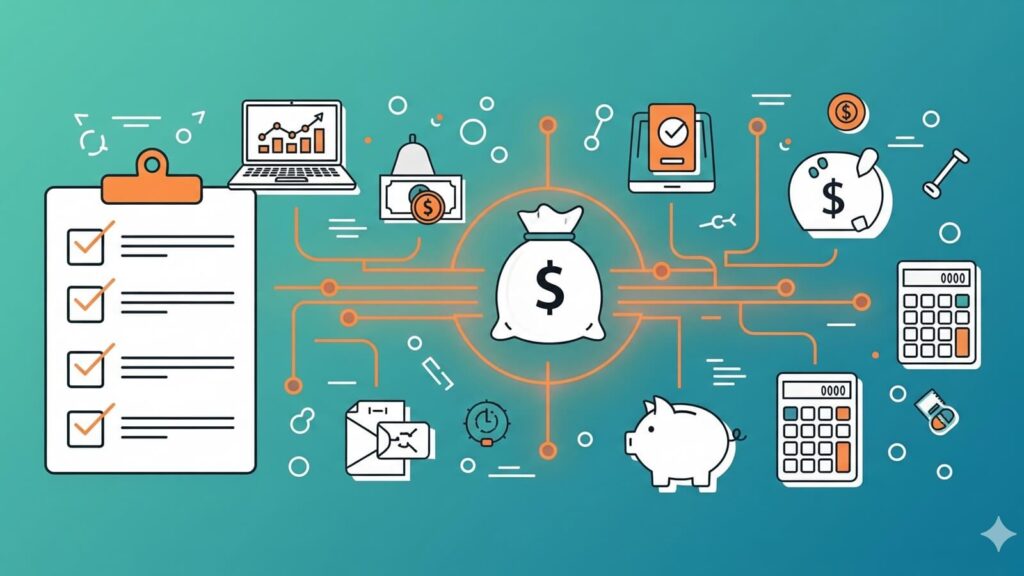
Immediate Action Steps (Today)
Research and Validation (₹0 investment)
- Identify your target market and validate demand through surveys, social media engagement, or direct conversations
- Research competitors to understand pricing, positioning, and market opportunities
- Define your unique value proposition and minimum viable product offering
- Calculate potential pricing and revenue projections based on market research
Legal Foundation (₹500-₹15,000 investment)
- Choose appropriate business structure (sole proprietorship vs. LLC vs. corporation)
- Register business name and obtain necessary licenses/permits
- Open dedicated business bank account
- Research tax obligations and set up basic record-keeping system
Week 1-2: Technical Infrastructure
Basic Online Presence (₹1,000-₹10,000 investment)
- Purchase domain name aligned with your business name/brand
- Set up reliable hosting with room for growth
- Install and configure basic website (WordPress, Shopify, or platform-specific solution)
- Configure secure payment processing for immediate sales capability
Essential Tools Setup (₹0-₹5,000 investment)
- Create professional email address using your domain
- Set up basic accounting system (Wave, QuickBooks, or spreadsheet initially)
- Install essential plugins/apps for functionality and security
- Create basic social media profiles on relevant platforms
Week 3-4: Launch Preparation
Content and Marketing Foundation (₹0-₹15,000 investment)
- Create essential website pages (About, Services/Products, Contact, Terms)
- Develop initial content strategy and create first pieces
- Set up email marketing system and create welcome sequence
- Plan and execute soft launch to friends, family, and early network
Operations and Customer Service (₹0-₹5,000 investment)
- Establish customer service processes and response systems
- Create basic FAQ and support documentation
- Set up order fulfillment, delivery, or service delivery processes
- Install analytics to track website performance and customer behavior
First 90 Days: Growth and Optimization
Revenue Generation Focus
- Execute planned marketing strategies and track performance metrics
- Collect customer feedback and testimonials for social proof
- Optimize website based on user behavior and conversion data
- Develop referral systems to leverage satisfied customers
Strategic Scaling Decisions
- Analyze financial performance against initial projections
- Identify successful marketing channels for increased investment
- Plan next phase investments based on demonstrated ROI
- Consider strategic partnerships or additional service/product offerings
Financial Management Maturity
- Establish consistent bookkeeping and financial reporting routines
- Build emergency fund from profits for business security
- Plan tax obligations and set aside appropriate reserves
- Evaluate financing needs for next growth phase
Conclusion: Your Path to Smart, Stress-Free Growth
Starting an online business doesn’t require choosing between broke desperation and reckless overspending. The most successful entrepreneurs find the middle path: investing strategically in essential infrastructure while maintaining lean operations that can adapt and scale based on real market feedback.
Remember the core principle: your budget should match your business model, risk tolerance, and growth timeline. Service-based businesses can often start with minimal investment (₹0-₹5,000), while product-based ventures may require ₹20,000-₹50,000+ for competitive positioning. The key is understanding which expenses directly impact revenue generation versus those that merely enhance convenience or appearance.
Focus on these priorities regardless of budget size:
- Secure payment processing capability
- Professional online presence (domain, hosting, basic website)
- Legal compliance and proper business registration
- Essential tools for operations and customer communication
- Adequate marketing budget for customer acquisition
Most importantly, don’t let small funds hold you back from starting. Every successful business began with someone taking the first step, often with limited resources but unlimited determination. Start simple, serve customers exceptionally well, and reinvest profits strategically. Your business will grow stronger and more sustainable when built on solid foundations rather than excessive initial investment.
Your entrepreneurial journey starts with a single decision to begin. Whether you have ₹500 or ₹50,000, focus on creating value for customers first—the financial success will follow naturally from that foundation.
This article forms part of our series, “Frequently Asked Questions (FAQs) About Starting Online,” providing you with clear, actionable guidance to launch and grow your digital business with confidence.