
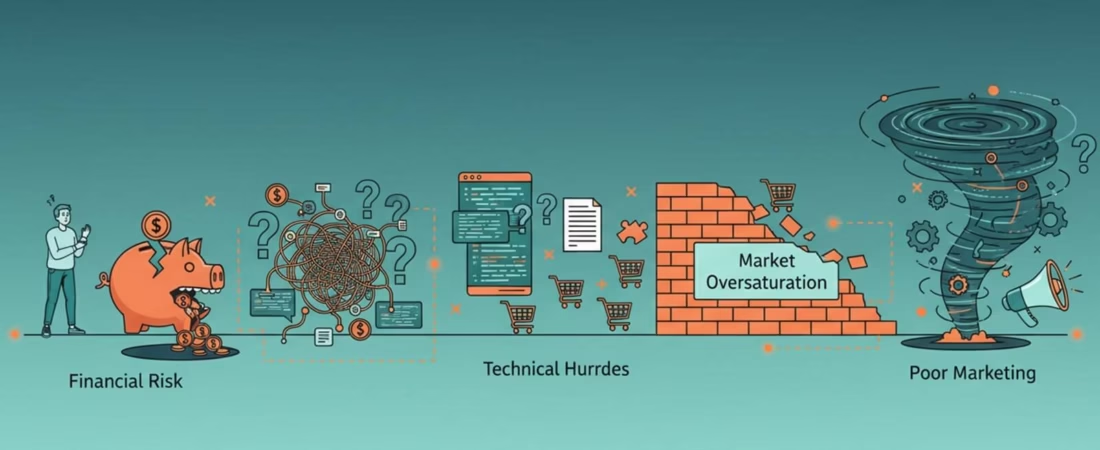
Starting an online business has never been more accessible than it is today. With just a laptop and an internet connection, you can launch a digital venture from your kitchen table, reach customers worldwide, and build something meaningful. The barriers to entry are lower, the tools are more sophisticated, and the opportunities seem endless.
But here’s the reality check every aspiring entrepreneur needs: accessibility doesn’t mean it’s risk-free. While 90% of startups fail, and 38% of startups fail because they run out of cash, these aren’t just scary statistics—they’re lessons wrapped in numbers. The good news? Most of these risks are completely manageable when you know what to look for and how to prepare.
This guide will walk you through the biggest risks for beginners in online business, using plain language and real-world examples. We’ll cover everything from the financial pitfalls that catch 82% of small businesses off guard to the work-life balance challenges that affect 35% of entrepreneurs. More importantly, we’ll give you actionable strategies to avoid or minimize each risk, so you can build your business with confidence and clarity.
Whether you’re launching an e-commerce store, starting a consulting practice, or building a digital product, understanding these entrepreneurship pitfalls for beginners is your first line of defense against failure. Let’s dive into what really trips up new online entrepreneurs—and how you can stay ahead of the game.
Financial Risk & Uncertain Income: Biggest Risks for Beginners in Online Business

The harsh reality of online entrepreneurship is that 38% of startups fail because they run out of cash, making financial risk the number one threat to new businesses. Unlike a traditional job with predictable paychecks, online businesses often experience feast-or-famine cycles, especially in the early stages.
What Financial Risk Really Looks Like
Financial risk in online business isn’t just about going broke—it’s about the cascade of problems that come from poor money management. Many beginners underestimate startup costs, focusing only on obvious expenses like website hosting or product inventory while forgetting about marketing budgets, professional tools, legal fees, and the dreaded “time to profitability” gap.
Consider Sarah, who launched an online jewelry business with $5,000 in savings. She spent $3,000 on inventory and $500 on a website, thinking she was well-prepared. But she didn’t budget for the $2,000-$6,000 per month that small businesses typically need for effective digital marketing. Six months later, with beautiful products but no customers, she was forced to close.
Why This Risk Derails Beginners
The financial challenges hit beginners particularly hard because:
- Cash flow is unpredictable: Unlike employees who get steady paychecks, entrepreneurs often wait 30-90 days for payments while expenses come immediately
- Revenue takes time to build: 85% of new product launches fail because they don’t meet market demand, meaning initial revenue projections are often wildly optimistic
- Hidden costs accumulate quickly: Professional software subscriptions, marketing tools, legal compliance, and unexpected expenses can easily double your initial budget
82% of new small businesses struggle with cash flow within their first five years, primarily because they don’t plan for the reality that building sustainable income takes much longer than expected.
Your Financial Risk Prevention Checklist
Create a Realistic Budget
- Calculate all startup costs, then add 50% buffer for unexpected expenses
- Research your industry’s typical time to profitability (often 6-18 months for online businesses)
- Plan for at least 6 months of living expenses before expecting consistent income
Build Multiple Revenue Streams Early
- Don’t rely on a single product or service
- Consider offering both one-time purchases and recurring subscriptions
- Explore affiliate marketing, partnerships, or licensing opportunities
Master Cash Flow Management
- Use accounting software to track money coming in and going out
- Negotiate favorable payment terms with suppliers
- Consider offering discounts for early payments from customers
Set Up Your Financial Safety Net
- Keep a separate emergency fund for business expenses
- Apply for a business credit line before you need it
- Consider starting part-time while maintaining other income sources
Monitor Your Burn Rate
- Track how much money you spend each month
- Calculate how long your funds will last at current spending levels
- Adjust spending based on actual (not projected) revenue
Pro Tip: Start lean and scale gradually. Many successful online entrepreneurs begin with minimal viable products and reinvest profits rather than taking on debt or giving up equity too early.
Burnout & Work-Life Imbalance

The freedom to work from anywhere sounds amazing until you realize you’re working everywhere, all the time. 72% of entrepreneurs report mental health concerns due to work-related stress, while 52% work more than 50 hours per week. The flexibility that draws people to online business often becomes their biggest trap.
What Entrepreneurial Burnout Actually Means
Burnout isn’t just feeling tired after a long week—it’s a state of physical, emotional, and mental exhaustion that affects your ability to function effectively. For online entrepreneurs, it often looks like 57% who experience sleepless nights due to work stress, constantly checking emails, inability to enjoy time off, and 49% who sacrifice their health for their business.
Take Mike, a freelance digital marketer who started working from home. Initially thrilled by his flexible schedule, he began taking on more clients to maximize income. Soon he was answering emails at 11 PM, working weekends, and skipping meals. After eight months, he was exhausted, his work quality declined, and several clients left. What started as freedom became a prison of his own making.
Why Online Entrepreneurs Are Especially Vulnerable
The digital nature of online business creates unique burnout risks:
- No physical boundaries: When your office is your laptop, work can happen anywhere, anytime
- Always-on mentality: Digital businesses never truly “close,” creating pressure to be constantly available
- Isolation: 35% of entrepreneurs lack work-life balance, often working alone without the social support of colleagues
- Validation pressure: Online metrics (likes, sales, traffic) create addictive feedback loops that encourage overwork
Remote workers face additional challenges, with 35% struggling with work-life balance and 70% feeling isolated from workplace connections.
Your Burnout Prevention Strategy
Set Rigid Work Boundaries
- Establish specific work hours and stick to them religiously
- Create a dedicated workspace that you can physically leave
- Use separate devices or accounts for business and personal activities
- Set “office hours” for client communications and stick to them
Build Sustainable Work Habits
- Take regular breaks throughout the day (try the Pomodoro Technique)
- Schedule at least one full day off per week with zero work activities
- Plan actual vacations where you completely disconnect
- 43% of successful business owners schedule personal time to maintain balance
Create Social Connections
- Join entrepreneur groups or co-working spaces
- Schedule regular video calls with other business owners
- Attend industry events or networking meetings
- Consider working from cafes or libraries occasionally for social interaction
Monitor Your Mental Health
- Track your energy levels and stress indicators
- Learn to recognize early warning signs of burnout
- Consider working with a therapist or coach who understands entrepreneurship
- Don’t hesitate to seek help—25% of entrepreneurs have sought professional help for mental health issues
Delegate and Outsource Early
- Identify tasks that don’t require your personal attention
- Start with small outsourcing projects (content writing, administrative tasks)
- Use automation tools for repetitive processes
- Remember: your time is valuable, and delegation is an investment, not an expense
Watch Out: The entrepreneur’s dilemma is that success often requires intense focus and long hours, but sustainable success requires balance. Find your sweet spot by tracking which activities generate the most value and focusing your intensive work periods there.
Lack of Market Research & Validation

This might be the most expensive mistake beginners make. 42% of startups fail because there is no market need for their product, while 85% of new product launches fail because they don’t meet a validated customer need. The assumption that “if you build it, they will come” has killed more businesses than any economic downturn.
What Market Validation Really Means
Market validation isn’t just asking friends if they like your idea—it’s systematically proving that people will actually pay money for what you’re offering before you invest significant time and resources. It’s the difference between building something people want versus building something you think they want.
Consider the story of Quibi, the short-form video platform that raised $1.75 billion but shut down within six months. The founders assumed people wanted bite-sized, Hollywood-quality content exclusively for mobile, but failed to validate whether consumers would pay for it when free alternatives like TikTok existed. Even with massive funding, they couldn’t overcome the lack of genuine market demand.
Why Beginners Skip This Critical Step
New entrepreneurs often bypass market research because:
- Excitement overrides logic: The passion for their idea makes them believe everyone else will share their enthusiasm
- Analysis paralysis fear: They worry that too much research will delay their launch and kill momentum
- Overconfidence in their “unique” insight: They believe they understand their market better than they actually do
- Limited resources: They think market research is expensive and time-consuming (it doesn’t have to be)
The result? 34% of small businesses that fail lack proper product-market fit, wasting months or years building something nobody wants.
Your Market Validation Action Plan
Start with Problem Validation
- Interview at least 10 potential customers about their current challenges
- Join online communities where your target audience hangs out
- Use surveys to quantify how painful the problem really is
- Look for evidence that people are already spending money trying to solve this problem
Test Demand Before Building
- Create a simple landing page describing your solution and collect email signups
- Run small paid advertising tests to see if people click and engage
- Build a basic prototype or minimum viable product (MVP) for early feedback
- Consider pre-selling to gauge genuine purchase intent
Analyze Your Competition
- Research who else is solving similar problems and how
- Study their pricing, marketing messages, and customer reviews
- Identify gaps in their offerings that you could potentially fill
- Don’t aim to be completely unique—successful markets often have multiple players
Use Free and Low-Cost Research Methods
- Google Trends to see search volume for related keywords
- Social media groups and forums for direct customer insights
- Industry reports and surveys (many are free online)
- Customer interviews via video calls (costs nothing but time)
Validate Your Business Model
- Test different pricing strategies with small customer groups
- Experiment with various sales and marketing channels
- Measure actual customer acquisition costs, not just traffic
- Calculate customer lifetime value based on real data, not projections
Track These Key Metrics
- Problem-solution fit: How well does your solution address the real problem?
- Product-market fit: Are customers willing to pay your proposed price?
- Market size: Is the addressable market large enough to sustain your business?
- Customer acquisition cost: Can you acquire customers profitably?
Pro Tip: Start small and iterate quickly. Launch a basic version of your product to a small group of customers, gather feedback, and improve before scaling. This approach saves money and dramatically increases your chances of success.
Remember: Market validation isn’t a one-time activity—it’s an ongoing process. Even successful businesses regularly check whether they’re still meeting market needs and adapt accordingly.
Overcompetition & Standing Out in Saturated Markets

The same accessibility that makes online business appealing to you also makes it attractive to millions of others. Amazon holds 37.6% of the US e-commerce market share, while countless other businesses fight for the remaining customers. In a world where 21% of retail purchases are expected to happen online in 2025, standing out feels increasingly difficult.
The Reality of Digital Market Saturation
Market saturation in online business means you’re not just competing with local companies—you’re competing globally. Whether you’re selling products, services, or content, there are likely thousands of others offering something similar. The global e-commerce industry is worth $6.8 trillion in 2025, but that massive pie is divided among over 28 million online stores globally.
For example, if you want to start a dropshipping business selling phone accessories, you’re competing against Amazon, AliExpress, and thousands of other sellers with similar products, often at lower prices. If you’re launching a digital marketing agency, you’re up against established firms with decades of experience and million-dollar advertising budgets.
Why Competition Overwhelms Beginners
New entrepreneurs often underestimate competitive challenges because:
- Visibility costs have skyrocketed: Small businesses typically need $2,000-$6,000 per month for digital marketing, but beginners often budget far less
- Customer acquisition is expensive: 48% of entrepreneurs face challenges attracting customers and building trust, especially when competing against established brands
- Search rankings take time: SEO results typically take 6-12 months, while paid advertising costs have increased dramatically
- Social proof matters: Customers prefer businesses with reviews, testimonials, and established reputations
The result is that many beginners launch great products but can’t get anyone to notice them in the crowded marketplace.
Your Competitive Strategy Framework
Find Your Unique Angle (Don’t Try to Be Everything)
- Identify a specific niche within your broader market
- Focus on underserved customer segments that larger competitors ignore
- Develop specialized expertise in a particular problem area
- Consider geographic, demographic, or psychographic micro-niches
Compete on Value, Not Price
- Offer superior customer service that big companies can’t match
- Create educational content that demonstrates your expertise
- Build personal relationships with customers (your advantage over large competitors)
- Package your offering uniquely even if the core product is similar
Leverage Your “Small Business” Advantages
- Move faster than large competitors when implementing changes
- Provide personalized attention that enterprise companies can’t offer
- Adapt quickly to customer feedback and market changes
- Build authentic relationships through direct communication
Master One Marketing Channel First
- Rather than spreading thin across all platforms, dominate one channel
- 70% of shoppers prefer smartphones, so mobile optimization is critical
- Focus on local SEO if you serve a geographic market
- Build authority through consistent content creation in your niche
Study and Learn from Competitors
- Analyze their pricing, marketing messages, and customer reviews
- Identify gaps in their service or product offerings
- Learn from their mistakes by reading negative reviews
- Use tools like SEMrush or Ahrefs to study their digital marketing strategies
Build Strategic Partnerships
- Partner with complementary businesses to cross-promote
- Join affiliate programs or create your own affiliate network
- Collaborate with influencers or industry experts
- Consider white-label partnerships with larger companies
Focus on Long-term Brand Building
- Consistently deliver exceptional customer experiences
- Build genuine relationships with your audience through social media
- Create valuable content that establishes you as an expert
- Prioritize customer retention over customer acquisition
Watch Out: Don’t try to compete directly with established giants on their terms. Amazon will always have better prices and faster shipping. Instead, compete on dimensions where being small is an advantage—personal attention, specialized knowledge, flexibility, and authentic relationships.
Pro Tip: Sometimes the best competitive strategy is to create a new category rather than fight in an existing one. Look for emerging trends or underserved needs where you can establish yourself as a pioneer rather than a follower.
Skill Gaps & Overwhelm

Starting an online business means wearing multiple hats: web developer, marketer, accountant, customer service representative, and CEO—often all in the same day. 40% of entrepreneurs lack technical knowledge, while trying to master everything from social media algorithms to tax compliance. This skill gap creates a perfect storm of overwhelm and ineffective execution.
The Modern Entrepreneur’s Skill Challenge
Today’s online business requires a blend of technical and business skills that no single person can master quickly. You need to understand:
- Digital marketing: SEO, social media, email marketing, paid advertising
- Technology: Website management, e-commerce platforms, analytics tools
- Business fundamentals: Accounting, legal compliance, project management
- Customer service: Communication, conflict resolution, relationship building
- Content creation: Writing, design, video production, photography
The overwhelm hits when you realize that each of these areas has enough depth to be a full-time career. Meanwhile, you’re trying to learn them all while actually running your business.
Why Skill Gaps Paralyze Beginners
The skill gap problem compounds because:
- Information overload: There’s too much advice online, often contradictory
- Perfectionism trap: Beginners think they need to master everything before starting
- Time constraints: Learning takes time away from actually building the business
- Imposter syndrome: 78% of UK business owners have experienced imposter syndrome, feeling unqualified despite their efforts
Many entrepreneurs spend months watching YouTube tutorials and reading blog posts, never actually implementing what they learn because they don’t feel “ready” yet.
Your Skill Development Strategy
Prioritize High-Impact Skills First
- Identify which skills directly generate revenue for your business model
- Focus on customer acquisition skills before optimization skills
- Learn basic financial management before advanced investment strategies
- Master one marketing channel before attempting multiple channels
Follow the 80/20 Rule
- Learn the 20% of each skill that provides 80% of the value
- Get “good enough” quickly rather than pursuing perfection
- Focus on implementation over comprehensive understanding
- You can always deepen knowledge later as your business grows
Use the Progressive Learning Approach
- Start with free resources (YouTube, blogs, podcasts) for basic understanding
- Invest in one quality course or mentor for your most critical skill gap
- Practice with small, low-risk projects before major implementations
- Join communities where you can ask questions and get feedback
Strategic Outsourcing Plan
- Identify tasks that are time-intensive but don’t require your personal touch
- Start with small projects to test freelancers or agencies
- Use platforms like Upwork, Fiverr, or 99designs for specific tasks
- 25% of small businesses have already integrated AI tools to automate routine tasks
Build Your Support Network
- Find a mentor who has succeeded in your industry
- Join entrepreneur groups (online or local) for peer learning
- Consider partnering with someone whose skills complement yours
- Don’t be afraid to ask for help—most successful entrepreneurs are willing to share advice
Create Learning Systems
- Dedicate specific time blocks for learning (not random browsing)
- Take notes and create simple checklists for processes you learn
- Practice new skills immediately rather than accumulating theoretical knowledge
- Set learning goals tied to specific business outcomes
Leverage Free and Low-Cost Resources
- Google’s Digital Marketing courses
- HubSpot Academy for marketing and sales
- YouTube channels specific to your industry
- Industry blogs and podcasts during commute time
- Free webinars and online events
Know When to Outsource vs. Learn
- Learn if: It’s a core business skill, you’ll use it frequently, or it affects customer experience directly
- Outsource if: It’s highly technical, time-intensive, or outside your natural strengths
- Consider tools/automation if: It’s repetitive or data-intensive
Pro Tip: Don’t try to learn everything at once. Pick one critical skill gap, spend 30 days focused on it, implement what you learn, then move to the next priority. Action beats perfection every time.
Watch Out: Avoid “shiny object syndrome”—constantly jumping to new tools or strategies without mastering the basics. Most successful online businesses are built on solid execution of fundamental skills, not advanced techniques.
Legal & Compliance Risks

Legal issues might seem boring compared to marketing and sales, but about 15% of startups face legal problems because they miss regulations, and compliance costs can force small startups to close entirely. The digital nature of online business doesn’t exempt you from real-world legal requirements—it often makes them more complex.
What Legal Compliance Really Involves
Online businesses face a maze of legal requirements that vary by location, industry, and business model:
- Business registration and structure: LLC, corporation, or sole proprietorship decisions
- Tax obligations: Income tax, sales tax, international tax laws for global customers
- Intellectual property: Trademark protection, copyright compliance, patent considerations
- Data privacy: GDPR, CCPA, and other privacy regulations for customer data
- Terms of service and privacy policies: Legal protection for your business
- Employment law: If you hire contractors or employees
- Industry-specific regulations: Health claims, financial services, children’s products
The complexity multiplies when you sell internationally or across state lines, where different jurisdictions have different rules.
Why Beginners Stumble on Legal Issues
New entrepreneurs often overlook legal compliance because:
- It’s not immediately urgent: Unlike marketing or product development, legal issues often don’t surface until there’s a problem
- It seems expensive: Lawyer consultations appear costly compared to DIY approaches
- Information is overwhelming: Legal requirements are complex and vary significantly
- “I’ll handle it later” mentality: Focus on growth first, compliance later (this is dangerous)
The problem is that legal issues tend to compound over time. A business that operates informally for two years faces much more complex (and expensive) compliance catch-up than one that handles it properly from the start.
Your Legal Compliance Action Plan
Start with Business Structure Basics
- Choose appropriate business entity (LLC is popular for online businesses)
- Register in your state and obtain necessary licenses
- Get an Employer Identification Number (EIN) from the IRS
- Open separate business banking accounts (never mix personal and business finances)
Protect Your Intellectual Property Early
- Research and register trademarks for your business name and key product names
- Understand copyright laws for content, images, and music you use
- Document your original creations and innovations
- Be careful using others’ intellectual property (images, music, text)
Handle Data Privacy and Website Compliance
- Create proper Terms of Service and Privacy Policy (not copied templates)
- Understand GDPR requirements if you have European customers
- Implement proper data collection and storage practices
- Display required disclosures for affiliate links or sponsored content
Set Up Proper Tax Systems
- Understand sales tax requirements for your products and locations
- Set up bookkeeping systems from day one (use software like QuickBooks)
- Save a percentage of income for tax payments (typically 25-30% for freelancers)
- Consider quarterly estimated tax payments to avoid penalties
Employment and Contractor Compliance
- Understand the difference between employees and contractors
- Use proper agreements for anyone you hire
- Comply with minimum wage and overtime laws for employees
- Handle payroll taxes correctly if you have employees
Industry-Specific Requirements
- Research regulations specific to your industry (food, finance, healthcare, etc.)
- Understand advertising and marketing claim requirements
- Check license requirements for professional services
- Comply with age restrictions if your business involves minors
Create Your Legal Safety Net
- Find a business attorney for major questions (many offer affordable consultations)
- Consider business insurance (general liability, professional liability, cyber insurance)
- Keep detailed records of all business activities and decisions
- Stay updated on changing laws that affect your industry
Budget for Legal Costs
- Plan for initial setup costs ($1,000-$3,000 for basic compliance)
- Budget for annual compliance costs (filing fees, license renewals)
- Set aside funds for legal consultations when issues arise
- Consider legal service subscriptions for ongoing simple needs
Pro Tip: Don’t let legal compliance paralyze you, but don’t ignore it either. Handle the basics early (business registration, separate finances, basic policies), then build more sophisticated compliance as your business grows.
Watch Out: Avoid copying legal documents from other websites. Generic templates often don’t cover your specific situation and may leave you unprotected. Invest in proper legal documents tailored to your business model.
Cybersecurity & Data Privacy Threats

Online businesses are sitting ducks for cybercriminals, and the statistics are sobering: 46% of small businesses have experienced a cyberattack, with 60% of small businesses closing within 6 months of a data breach. For online entrepreneurs, who often handle customer data and financial information, cybersecurity isn’t just IT—it’s business survival.
The Real Cost of Cyber Attacks
Cyber attacks on small businesses aren’t just about stolen money—they destroy trust and operations. Nearly one in five attacked businesses filed for bankruptcy or closed, while 80% had to spend time rebuilding trust with clients after an attack.
Consider Maria’s online coaching business. A ransomware attack encrypted all her client files, course materials, and email lists. Even though she paid the $3,000 ransom, she lost three weeks rebuilding systems, several clients who lost confidence in her security, and countless hours dealing with the aftermath. The attack cost her more than $15,000 in lost revenue and recovery expenses.
Why Online Businesses Are Prime Targets
Cybercriminals target small online businesses because:
- Limited security budgets: Unlike large corporations, small businesses often use basic security measures
- Valuable data: Customer information, payment details, and business data are worth money to criminals
- Less security awareness: 43% of cyberattacks target small businesses, partly because owners underestimate their risk
- Remote work vulnerabilities: Home offices and personal devices create security gaps
- Supply chain access: Criminals use small business access to attack larger clients or partners
91% of cyberattacks start with phishing—deceptive emails that trick people into revealing passwords or installing malware.
Your Cybersecurity Defense Strategy
Secure Your Basic Digital Infrastructure
- Use strong, unique passwords for all business accounts (consider a password manager)
- Enable two-factor authentication on all important accounts (email, banking, social media)
- Keep all software updated, including operating systems, browsers, and plugins
- Use reputable antivirus software on all devices used for business
Protect Customer Data
- Use secure, encrypted platforms for storing customer information
- Never store credit card information unless you’re PCI DSS compliant
- Limit access to sensitive data—only employees who need it should have access
- Regularly backup customer data to secure, separate locations
Email Security (Your Biggest Vulnerability)
- Be suspicious of unexpected attachments or links, even from known contacts
- Verify requests for money transfers or sensitive information through separate communication
- Train yourself and any employees to recognize phishing attempts
- Use business email services rather than free personal accounts
Website and E-commerce Security
- Choose reputable hosting providers with strong security measures
- Use HTTPS encryption on your entire website (not just checkout pages)
- Keep your website platform (WordPress, Shopify, etc.) updated
- Regular backup your website and test restoration procedures
Financial Protection
- Monitor bank accounts and credit cards daily for suspicious activity
- Use separate business credit cards for online purchases
- Set up account alerts for all transactions
- Consider cyber insurance (many policies are under $2,000 annually)
Create Incident Response Plans
- Know who to contact if you suspect a breach (bank, customers, authorities)
- Have a communication plan for notifying affected customers
- Keep offline backups of critical business data
- Document your security measures for insurance and legal purposes
Employee and Contractor Security
- Provide basic cybersecurity training for anyone with business access
- Use secure file sharing platforms instead of email for sensitive documents
- Revoke access immediately when someone leaves your business
- Consider requiring personal cybersecurity measures for remote workers
Budget for Security
- Plan to spend 3-7% of revenue on cybersecurity measures
- Start with basic protections (password managers, antivirus, backups)
- Gradually invest in more sophisticated security as your business grows
- Consider the cost of security versus the cost of a breach
Pro Tip: Most cyber attacks succeed because of human error, not sophisticated technology. Focus on building good security habits rather than buying expensive security tools. Simple practices like strong passwords, software updates, and email caution prevent most attacks.
Watch Out: Don’t assume you’re “too small” to be targeted. Cybercriminals use automated tools that target thousands of businesses simultaneously. Your size doesn’t provide protection—good security practices do.
Debt & Overinvestment

The excitement of launching an online business often leads to dangerous financial decisions. New entrepreneurs spend heavily on tools, advertising, inventory, or courses, thinking that more investment equals faster success. Instead, 82% of new small businesses struggle with cash flow, often because they’ve overinvested in areas that don’t immediately generate revenue.
What Overinvestment Looks Like
Overinvestment in online business typically falls into these categories:
- Tool addiction: Subscribing to every marketing tool, design software, and business app available
- Premature scaling: Hiring employees or renting office space before proving the business model
- Advertising overspend: Pouring money into Facebook or Google ads without understanding customer acquisition costs
- Inventory mistakes: Ordering large quantities of products before testing demand
- Education overkill: Spending thousands on courses, coaches, and conferences without implementation
Take James, who launched a dropshipping business and immediately subscribed to 15 different marketing tools, hired a virtual assistant, and spent $5,000 on Facebook ads in his first month. Within three months, he’d spent $12,000 but generated only $2,000 in revenue. His monthly overhead was so high that even small profits couldn’t sustain the business.
Why Beginners Overinvest
The overinvestment trap catches beginners because:
- FOMO (Fear of Missing Out): Every marketing email promises the “secret tool” that will unlock success
- Impatience: They want to fast-track success rather than build gradually
- Lack of financial planning: No clear budget or return-on-investment calculations
- Success stories bias: They hear about businesses that scaled quickly with big investments, not the failures
- Confusion about causation: They think expensive tools and services caused others’ success
One-third of SMEs hold debt levels more than ten times their cash balances, creating unsustainable financial pressure that forces quick, desperate decisions.
Your Smart Investment Strategy
Start with the Minimum Viable Investment
- Identify the absolute minimum tools and services needed to test your business idea
- Use free or low-cost alternatives initially (Google Docs vs. expensive project management)
- Focus spending on areas that directly impact customer acquisition or satisfaction
- Prove your business model before investing in optimization or scaling
Apply the 90-Day Rule
- For any significant purchase, wait 90 days to see if you still need it
- Track the ROI of tools you already use before adding new ones
- Cancel subscriptions you haven’t used in 30 days
- Choose multi-purpose tools over specialized single-function options
Budget by Business Stage
- Testing stage: Keep monthly overhead under $500
- Validation stage: Limit investment to proven revenue-generating activities
- Growth stage: Invest a percentage of proven revenue, not projected revenue
- Scale stage: Make larger investments only after consistent profitability
Smart Tool Selection Strategy
- Start with free versions of tools and upgrade only when you hit their limits
- Read actual user reviews, not just marketing materials
- Calculate the true cost including setup time and learning curve
- Choose tools that integrate with your existing systems
Advertising and Marketing Investment
- Never spend more on ads than your proven customer lifetime value
- Start with small daily budgets ($10-50) to test and learn
- Focus on one advertising platform until you master it
- Track cost per customer acquisition obsessively
Avoid Debt Financing Early
- Bootstrap as long as possible using revenue to fund growth
- Personal credit cards for business expenses create dangerous cash flow pressure
- Business loans should fund proven growth opportunities, not experiments
- Consider revenue-based financing over traditional loans for online businesses
Create Investment Decision Criteria
- Will this directly increase revenue within 90 days?
- Do I have data proving this investment will generate positive ROI?
- Have I maximized the tools and resources I already have?
- Can I afford this expense if it generates zero return?
Track Your Investment Performance
- Monitor return on investment for every major expense
- Use simple metrics: revenue generated per dollar spent
- Review and cancel underperforming subscriptions monthly
- Keep detailed records for tax purposes and future decision-making
Pro Tip: The most successful online businesses are often built with surprisingly small initial investments. Focus on generating revenue with minimal tools, then reinvest profits strategically rather than betting big upfront.
Watch Out: Marketing tactics that create urgency (“Limited time offer!” or “Only 100 spots available!”) often target overinvestment tendencies. Make major purchases based on business needs and ROI analysis, not emotional urgency.
Lack of Marketing & Customer Focus

One of the most dangerous assumptions beginners make is “If I build a great product, customers will find me.” This “Field of Dreams” mentality kills businesses. 48% of entrepreneurs face challenges attracting customers and building trust, while 22% of startups that fail don’t have a sound marketing strategy. In today’s crowded online marketplace, great products without great marketing remain invisible.
The “Build It and They Will Come” Trap
Many entrepreneurs spend months perfecting their product, website, or service, assuming that quality alone will drive success. They focus on features, design, and functionality while giving little thought to how customers will discover them. This approach fails because:
- Customers can’t buy what they don’t know exists
- Online markets are incredibly noisy with millions of options
- 70% of shoppers prefer smartphones for online shopping, meaning you need mobile-optimized marketing
- Social proof and reviews matter more than perfect products
Consider Lisa, who spent eight months creating a beautifully designed online course about personal finance. She built comprehensive content, professional videos, and a slick website. But she spent only $200 on marketing and assumed her social media posts would generate sales. After launching to just 12 students, she realized that her zero marketing budget had doomed even the best product.
Why Customer Focus Gets Lost
Beginners often neglect marketing and customer focus because:
- Product obsession: They’re so excited about building something that they forget about selling it
- Marketing seems expensive: Small businesses need $2,000-$6,000 per month for digital marketing, which seems overwhelming
- Technical skills over marketing skills: Many entrepreneurs are comfortable with building but uncomfortable with selling
- Perfectionism delays launch: They want everything perfect before starting marketing activities
The result is that many online businesses launch as “best-kept secrets”—great products that nobody knows about.
Your Customer-Focused Marketing Strategy
Understand Your Customer First
- Create detailed customer personas based on real research, not assumptions
- Interview potential customers about their problems, not your solution
- Join online communities where your target customers spend time
- Study customer reviews of competitors to understand what people really want
Start Marketing Before You Launch
- Build an email list while developing your product
- Share your development process on social media to build interest
- Create valuable content that demonstrates your expertise
- Network with potential customers and industry influencers
Focus on One Marketing Channel Initially
- Choose the platform where your customers are most active
- Master that channel before expanding to others
- Social commerce is expected to reach $6.2 trillion by 2030, making social media a critical channel
- Track which channels actually generate customers, not just followers
Create Valuable Content Consistently
- Blog posts, videos, podcasts, or social media content that helps your audience
- Share knowledge freely to build trust and authority
- AI is improving performance in marketing and communications for small businesses
- Repurpose content across multiple channels to maximize reach
Build Social Proof from Day One
- Collect testimonials from beta users or early customers
- Encourage and respond to online reviews
- Share customer success stories and case studies
- Display any credentials, certifications, or media coverage
Implement Customer Feedback Loops
- Regularly survey customers about their experience
- Monitor social media mentions and online reviews
- Ask for feedback on new features or products before launching
- Use customer language in your marketing materials
Invest in Relationship Building
- Respond personally to comments and emails when possible
- Attend industry events and networking opportunities
- Collaborate with other businesses serving similar customers
- Build partnerships that provide mutual value
Track Marketing ROI Religiously
- Measure cost per customer acquisition for each marketing channel
- Track customer lifetime value to understand profitability
- Use analytics to understand which content drives actual sales
- Adjust spending based on performance, not assumptions
Scale What Works
- Double down on marketing activities that generate customers
- Eliminate or reduce spending on activities that don’t convert
- Test new channels only after mastering current ones
- Reinvest marketing profits to fund growth
Pro Tip: Start building your audience before you have something to sell. The businesses that succeed fastest often have been nurturing potential customers for months before launch day.
Watch Out: Avoid vanity metrics like followers, likes, or website traffic. Focus on metrics that matter: email subscribers, qualified leads, and actual customers. A smaller, engaged audience is more valuable than a large, passive one.
Self-Doubt & Fear of Failure

Perhaps the most insidious risk beginners face is the one inside their own heads. 78% of UK business owners have experienced imposter syndrome, while 42% say the fear of failure is a main source of stress. Unlike external challenges, self-doubt doesn’t go away with more money or better tools—it requires different strategies entirely.
The Inner Game of Entrepreneurship
Self-doubt in entrepreneurship often manifests as:
- Imposter syndrome: Feeling like you don’t belong or aren’t qualified to run a business
- Analysis paralysis: Over-researching and over-planning to avoid taking action
- Perfectionism: Delaying launches because nothing feels “good enough”
- Comparison trap: Measuring your beginning against others’ success stories
- Fear of judgment: Worrying about what friends, family, or peers will think if you fail
These internal challenges are particularly destructive because they prevent entrepreneurs from taking the very actions necessary for success. You can have the perfect business plan, but if self-doubt keeps you from executing it, the plan is worthless.
Why Online Entrepreneurs Are Especially Vulnerable
The digital nature of online business amplifies self-doubt:
- Isolation: Working alone without colleagues to provide encouragement and reality checks
- Comparison culture: Social media showcases others’ successes while hiding their struggles
- Information overload: Endless “expert” advice creates confusion about the “right” way to do things
- Instant feedback: Online metrics (likes, views, sales) provide constant judgment
- No clear path: Unlike traditional careers, entrepreneurship has no defined progression
68% of entrepreneurs report feeling like failures at some point, showing how universal these feelings are, even among successful business owners.
Your Self-Doubt Management System
Reframe Your Relationship with Failure
- View failures as data points, not personal judgments
- Celebrate small wins and progress, not just big achievements
- Keep a “success journal” documenting daily accomplishments
- Remember that 90% of startups fail—failure is normal, not personal
Build Competence Through Action
- Start with small, low-risk experiments rather than betting everything on one idea
- Focus on learning rather than perfect outcomes
- Track your skill development over time to see actual progress
- Take imperfect action rather than waiting for perfect preparation
Create External Accountability
- Join entrepreneur groups or mastermind programs
- Find a mentor who’s succeeded in your industry
- Share your goals publicly to create positive pressure
- Work with a coach who understands entrepreneurship challenges
Develop Mental Resilience Practices
- Regular exercise and adequate sleep to manage stress
- Meditation or mindfulness practices to observe thoughts without being controlled by them
- Limit consumption of social media that triggers comparison
- Professional therapy or counseling when needed (25% of entrepreneurs seek professional help)
Challenge Negative Thought Patterns
- Question the evidence for self-defeating beliefs
- Ask “What would I tell a friend facing this same challenge?”
- Focus on what you can control rather than outcomes you can’t
- Replace “I don’t know how” with “I don’t know how yet”
Build a Support Network
- Connect with other entrepreneurs who understand the journey
- Maintain relationships with friends and family outside of business
- Find communities (online or offline) where you can be vulnerable about challenges
- 55% of entrepreneurs feel they don’t get enough emotional support—actively seek it
Set Realistic Expectations
- Understand that building a business takes time—typically 2-3 years to see significant results
- Expect setbacks and plan for them rather than being surprised
- Compare your progress to your own starting point, not to others
- Celebrate progress, not just destinations
Focus on Your “Why”
- Remember the deeper reasons you started your business
- Keep your mission and values visible during difficult times
- Connect your work to something larger than personal success
- Find meaning in the process, not just the outcomes
Develop Evidence-Based Confidence
- Keep records of positive customer feedback and testimonials
- Document your learning and skill development
- Track objective measures of progress (revenue, customers, skills)
- Review these records when self-doubt strikes
Pro Tip: Self-doubt never completely disappears, even for successful entrepreneurs. The goal isn’t to eliminate it but to act despite it. Confidence comes from action, not the other way around.
Watch Out: Avoid the trap of thinking you need to “fix” your mindset before taking action. Often, taking action despite fear is what builds genuine confidence. Start before you feel ready—readiness is often perfectionism in disguise.
Your New Entrepreneur Risk Management Checklist

Now that you understand the major risks, here’s your practical action plan to minimize each one:
Financial Risk Prevention
- Create a realistic budget with 50% buffer for unexpected expenses
- Build 6 months of living expenses as emergency fund
- Track cash flow weekly using accounting software
- Set up separate business banking accounts
- Calculate and monitor customer acquisition costs
Burnout Prevention
- Establish firm work hours and stick to them
- Create a dedicated workspace you can physically leave
- Schedule regular breaks and at least one full day off per week
- Join entrepreneur communities for social support
- Monitor stress levels and seek help when needed
Market Validation
- Interview at least 10 potential customers about their problems
- Test demand with a simple landing page before building
- Research competitors and identify market gaps
- Create a minimum viable product for early feedback
- Track problem-solution fit and product-market fit metrics
Competition Strategy
- Identify your unique niche within the broader market
- Focus on one marketing channel until you master it
- Compete on value and personal service, not price
- Build strategic partnerships with complementary businesses
- Study competitor reviews to find service gaps
Skill Development
- Prioritize high-impact skills that directly generate revenue
- Learn the 20% of each skill that provides 80% of the value
- Create specific learning goals tied to business outcomes
- Build a network of mentors and peers for guidance
- Know when to outsource vs. learn in-house
Legal Compliance
- Choose and register appropriate business structure
- Set up proper bookkeeping and tax systems
- Create Terms of Service and Privacy Policy for your website
- Research industry-specific regulations that apply to you
- Budget for basic legal setup and annual compliance costs
Cybersecurity Protection
- Use strong, unique passwords and two-factor authentication
- Keep all software and systems updated
- Create regular backups of important business data
- Train yourself and employees to recognize phishing attempts
- Consider cyber insurance for additional protection
Smart Investment Approach
- Apply the 90-day rule before major purchases
- Start with minimum viable investment to test business model
- Track return on investment for every significant expense
- Focus on revenue-generating activities over optimization tools
- Avoid debt financing until you have proven profitability
Marketing and Customer Focus
- Start building an audience before you have something to sell
- Create valuable content consistently to build authority
- Focus on metrics that matter: leads and customers, not followers
- Implement customer feedback loops for continuous improvement
- Track customer acquisition costs and lifetime value
Mental Health and Confidence
- Keep a success journal documenting daily wins
- Build a support network of other entrepreneurs
- Set realistic expectations for business growth timeline
- Practice taking imperfect action rather than waiting for perfection
- Seek professional help when self-doubt becomes overwhelming
Key Takeaways: Your Path Forward
Starting an online business in 2025 is both more accessible and more challenging than ever before. While 90% of startups fail, understanding these risks puts you in the prepared 10% who can navigate the challenges successfully.
Remember these critical insights:
- Financial planning is everything: 38% of businesses fail due to cash flow issues, but this is completely preventable with proper budgeting and realistic expectations.
- Work-life balance protects your business: 72% of entrepreneurs experience mental health challenges, but setting boundaries and managing stress ensures you can sustain long-term success.
- Market validation saves time and money: 85% of product launches fail due to lack of market need, but testing demand early prevents wasted resources.
- Competition is opportunity: 48% struggle with customer acquisition, but focused niche marketing and exceptional service help you stand out.
- Skills develop through action: 40% lack technical knowledge, but you don’t need to master everything before starting—learn as you grow.
- Legal compliance protects your future: 15% face legal issues, but basic setup and ongoing attention prevent major problems.
- Security is business insurance: 46% experience cyber attacks, but simple security practices prevent most threats.
- Smart investment beats big investment: Focus spending on revenue-generating activities rather than tools and courses.
- Marketing starts before launching: Build audience and validate demand while creating your product or service.
- Self-doubt is normal and manageable: 78% experience imposter syndrome, but action builds confidence more than thinking does.
The biggest risk isn’t facing these challenges—it’s not being prepared for them. Armed with this knowledge and your action checklist, you’re ready to build a sustainable online business that survives and thrives.
Your next step: Choose the one risk that concerns you most and implement those specific prevention strategies this week. Success comes from consistent action on the fundamentals, not from avoiding all risks.
Every successful entrepreneur started where you are now, facing the same uncertainties and challenges. The difference is they started anyway, learned from mistakes, and kept moving forward. You can too.
Which risk are you most worried about, and what will you do this week to address it?
This article forms part of our series, “Frequently Asked Questions (FAQs) About Starting Online,” providing you with clear, actionable guidance to launch and grow your digital business with confidence.