

Starting a side hustle has become more than just a trend—it’s a strategic necessity in today’s economy. With rising costs and economic uncertainty, avoiding common side hustle mistakes is crucial for transforming your passion project into a profitable venture. This comprehensive guide reveals the most frequent side hustle pitfalls that drain time, money, and motivation, while providing actionable solutions to help you build a smarter, more sustainable side business.
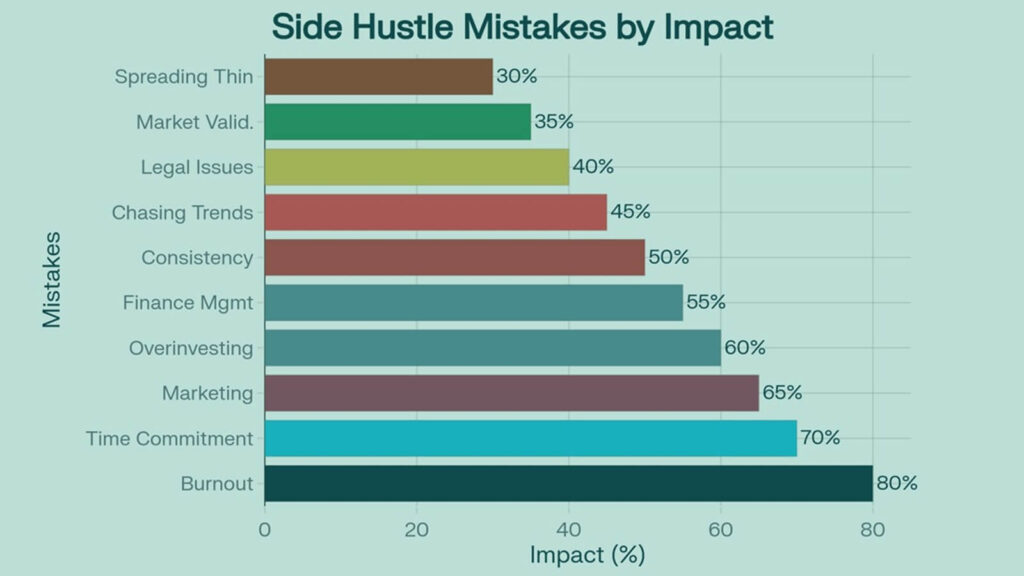
Top 10 Common Side Hustle Mistakes: A Visual Guide to Avoiding Costly Pitfalls
The entrepreneurial landscape has never been more accessible, yet side hustle failures remain surprisingly common. Research shows that 35% of side hustles fail because they don’t address genuine market needs, while 50% of entrepreneurs quit within their first year due to unrealistic expectations. Understanding these patterns isn’t about discouraging ambition—it’s about empowering you with the knowledge to avoid the costly missteps that derail countless aspiring entrepreneurs.
Understanding the Side Hustle Success Landscape

Side hustle success tips begin with recognizing that building a sustainable business requires more than passion—it demands strategic thinking, careful planning, and realistic expectations. The most successful side hustlers understand that their venture sits within a broader ecosystem of personal commitments, professional obligations, and market realities.
The Foundation of Smart Side Hustling
Before diving into specific mistakes, it’s essential to understand what separates successful side hustlers from those who struggle. Successful entrepreneurs typically share several key characteristics: they validate their ideas before investing heavily, they maintain clear boundaries between their side hustle and primary job, and they approach their venture with both optimism and pragmatic planning.
Mistake 1: Underestimating Time Commitment

The Problem: Believing Your Side Hustle is “Easy” to Juggle
One of the most pervasive mistakes new entrepreneurs make is dramatically underestimating the time investment required to build a successful side hustle. Many aspiring entrepreneurs fall into the trap of viewing their side venture as something they can “squeeze in” during spare moments, treating it like a casual hobby rather than a serious business endeavor.
Case Example: Sarah, a marketing professional, launched a handmade jewelry business expecting to dedicate “a few hours on weekends.” Within three months, she found herself working until 2 AM on weekdays, handling customer service emails during lunch breaks, and sacrificing family time to fulfill orders. Her initial optimism quickly turned to exhaustion as she realized her “simple” side hustle required skills in product design, photography, social media marketing, customer service, inventory management, and financial planning.
The Impact: Why Time Miscalculation Derails Dreams
When entrepreneurs underestimate time requirements, several destructive patterns emerge. Side hustle burnout becomes inevitable as individuals stretch themselves beyond sustainable limits. Performance suffers in both their primary job and side venture, creating a vicious cycle where neither receives adequate attention. This divided focus often leads to strained relationships, compromised health, and ultimately, abandonment of the side hustle altogether.
The Solution: Realistic Scheduling and Expectation-Setting
Time-Blocking Strategy: Successful side hustlers implement structured time-blocking systems that allocate specific hours for different business activities. Begin by tracking your current time usage for two weeks, identifying genuinely available hours without compromising sleep, family time, or primary job performance.
Progressive Time Investment: Start with a minimal viable time commitment—perhaps 5-7 hours per week—and gradually increase as your systems become more efficient and your revenue justifies additional investment. This approach prevents overwhelming yourself while building sustainable habits.
Boundary Setting: Establish clear boundaries around when you work on your side hustle. Communicate these boundaries to family, friends, and even yourself. Consider using separate devices or dedicated workspace areas to maintain psychological separation between your various roles.
Mistake 2: Chasing Trends Over Personal Fit

The Problem: Jumping on “Hot” Opportunities Without Alignment
The allure of trending side hustles—from cryptocurrency trading to drop-shipping viral products—often overshadows the critical importance of personal alignment. Beginner side hustle errors frequently involve chasing opportunities that promise quick profits but don’t match the entrepreneur’s skills, interests, or lifestyle circumstances.
Real-World Scenario: Michael, an introverted accountant, jumped into social media influencing after seeing success stories online. Despite having no passion for content creation or comfort with public speaking, he invested in expensive camera equipment and spent months creating content that felt inauthentic. His lack of genuine enthusiasm showed in his content quality, leading to minimal engagement and eventual abandonment of the venture.
The Hidden Costs of Misalignment
When side hustles don’t align with personal strengths and interests, entrepreneurs face multiple challenges. Side gig mistakes to avoid include pursuing ventures that feel like endless uphill battles rather than natural extensions of existing capabilities. This misalignment leads to decreased motivation, poor performance, and higher likelihood of quitting when inevitable obstacles arise.
The Solution: Personal Alignment Assessment
Skills Inventory Process: Before committing to any side hustle, conduct a thorough assessment of your existing skills, natural talents, and genuine interests. What tasks do colleagues frequently ask for your help with? What activities do you find energizing rather than draining? These questions reveal potential monetization opportunities that leverage your existing strengths.
Passion-Profit Intersection: The most sustainable side hustles exist at the intersection of what you enjoy doing, what you’re good at, and what people will pay for. Use this framework to evaluate opportunities rather than simply chasing the highest potential income.
Market Research with Personal Fit: Even if a side hustle aligns with your skills and interests, validate that sufficient market demand exists. Conduct informal surveys within your network, research competitor pricing and customer reviews, and consider testing your concept on a small scale before committing significant resources.
Mistake 3: Neglecting Market Validation

The Problem: Building Before Testing Demand
Perhaps no mistake is more costly than assuming people want what you’re offering without actually verifying demand. Side hustle pitfalls often include entrepreneurs who become so enamored with their product or service idea that they skip the crucial step of market validation.
Cautionary Tale: Jennifer spent six months developing a mobile app for pet owners to track veterinary appointments, invested $8,000 in development costs, and created elaborate marketing materials. Only after launch did she discover that most pet owners simply used their existing calendar apps for this purpose, and the market for a specialized solution was much smaller than she had assumed.
The Expensive Consequences of Unvalidated Ideas
Market validation failures represent one of the primary reasons how to avoid side hustle failures becomes so critical. Without validation, entrepreneurs risk building solutions to problems that don’t exist or don’t warrant a paid solution. This mistake often compounds other errors, as unvalidated ventures require more time, energy, and financial investment to achieve minimal results.
The Solution: Quick Market Validation Techniques
Pre-Launch Validation Methods: Before building anything substantial, test your concept through low-cost validation methods. Create simple landing pages describing your offering and measure genuine interest through email sign-ups or pre-orders. Conduct informal interviews with potential customers to understand their current solutions and pain points.
Minimum Viable Product (MVP) Testing: Develop the simplest possible version of your offering that allows you to test core assumptions. This might be a basic service offering, a single product variant, or even a detailed description of your planned solution. The goal is learning, not perfection.
Feedback Integration Process: Establish systems for gathering and incorporating customer feedback throughout your development process. Regular feedback loops prevent you from building in isolation and ensure your offering evolves based on real market needs rather than assumptions.
Mistake 4: Overinvesting Too Early

The Problem: Spending on Tools, Ads, and Infrastructure Before Proof of Concept
Enthusiasm often leads aspiring entrepreneurs to invest heavily in their side hustle before establishing basic viability. Side business warning signs include purchasing expensive equipment, premium software subscriptions, or aggressive advertising campaigns before generating any revenue or validating market demand.
Expensive Example: David launched a consulting practice and immediately invested $5,000 in professional website design, premium CRM software, business cards, and LinkedIn advertising. Three months later, having secured only one small client, he realized he could have tested his concept with basic tools and personal networking, saving thousands of dollars while learning about his market.
The Financial and Psychological Burden
Early overinvestment creates multiple problems beyond immediate financial loss. High upfront costs increase pressure to succeed quickly, often leading to poor decision-making and increased stress. Additionally, expensive early investments can create psychological barriers to pivoting or abandoning unsuccessful approaches, trapping entrepreneurs in unsustainable ventures.
The Solution: Bootstrap and Reinvest Strategy
Start Lean Philosophy: Begin with the absolute minimum investment required to test your concept. Use free or low-cost alternatives for initial operations: free website builders instead of custom design, basic social media accounts instead of paid advertising, and personal network outreach instead of expensive marketing campaigns.
Revenue-Based Reinvestment: Establish clear milestones for increased investment based on actual revenue generation rather than optimistic projections. For example, commit to purchasing premium tools only after achieving your first $1,000 in revenue, or upgrading your website only after securing five paying customers.
Cost-Benefit Analysis Framework: Before making any purchase, ask yourself: “Will this investment directly lead to customer acquisition or revenue generation within the next 30 days?” If the answer is unclear, delay the purchase until your business fundamentals are more established.
Mistake 5: Ignoring Legal and Compliance Basics

The Problem: Operating Without Proper Structure and Understanding
Many side hustlers focus intensely on product development and marketing while completely overlooking legal and tax obligations. Mistakes new entrepreneurs make frequently include operating without proper business registration, ignoring tax implications, or failing to establish basic legal protections.
Real Consequences: Lisa’s successful etsy shop generated $15,000 in its first year, but she hadn’t separated business finances or tracked deductible expenses. At tax time, she owed significant taxes on the full revenue amount and couldn’t document legitimate business expenses, resulting in a much larger tax bill than necessary.
The Compounding Risks of Legal Neglect
Legal oversights create cascading problems that become more expensive and complicated over time. Side hustle advice consistently emphasizes that addressing legal requirements early prevents major headaches later. Delayed compliance can result in penalties, increased tax liability, and potential personal legal exposure.
The Solution: Basic Legal Checklist and Professional Guidance
Essential Legal Framework: Research basic requirements for your location and business type, including business registration, tax ID numbers, and any required licenses or permits. Many localities offer free resources through small business development centers or online government portals.
Financial Separation Strategy: Open separate business checking accounts immediately, even if your side hustle is still small. This separation simplifies tax preparation, enables better financial tracking, and provides legal protection by clearly distinguishing business from personal activities.
Professional Consultation Timeline: While you don’t need expensive legal advice immediately, establish relationships with basic professional services—an accountant for tax guidance and a lawyer for contracts or liability questions. Many professionals offer initial consultations at reasonable rates and can prevent costly mistakes.
Mistake 6: Lack of Consistency and Patience

The Problem: Expecting Fast Results and Quitting After Slow Starts
Social media success stories and “overnight success” narratives create unrealistic expectations about side hustle timelines. Common side hustle mistakes include expecting immediate results and abandoning promising ventures during normal early-stage challenges.
Typical Pattern: Mark started a freelance graphic design business and actively pursued clients for six weeks. When he hadn’t landed a major project by week eight, he concluded that “freelancing doesn’t work” and abandoned his efforts, despite having built a portfolio and established several promising contacts.
The Success Timeline Reality
Most successful side hustles require 12-18 months to establish sustainable revenue streams. The entrepreneurs who succeed understand that initial slow periods are normal parts of the process, not indicators of ultimate failure. Building a customer base, refining offerings, and establishing reputation all require time and consistent effort.
The Solution: Patience Framework and Progress Tracking
Milestone-Based Expectations: Instead of expecting immediate revenue, establish process-based milestones such as “contact 10 potential customers per week” or “publish 2 pieces of content weekly”. These controllable metrics provide consistent motivation and progress indicators.
Small Wins Celebration: Document and celebrate incremental progress: your first customer inquiry, positive feedback, or successful completion of a project. These small victories provide motivation during inevitable challenging periods.
Minimum Commitment Contract: Make a commitment to pursue your side hustle for at least 6-12 months before evaluating its viability. This “minimum commitment” prevents premature abandonment during normal startup challenges while providing a clear evaluation timeline.
Mistake 7: Poor Money Management

The Problem: Mixing Business and Personal Finances
Financial chaos represents one of the most common and damaging side hustle pitfalls. Many entrepreneurs treat their side hustle finances casually, mixing business income with personal funds, failing to track expenses, and operating without clear understanding of profitability.
Dangerous Example: Rachel’s photography side business generated $20,000 in revenue, but she deposited all payments into her personal checking account and used personal credit cards for equipment purchases. At year-end, she couldn’t determine actual profitability, missed numerous tax deductions, and faced a complex financial mess that required professional help to untangle.
The Hidden Costs of Financial Disorganization
Poor financial management creates multiple problems beyond mere inconvenience. Side gig mistakes to avoid include losing money through missed deductions, facing tax complications, and making poor business decisions based on unclear financial data. Additionally, financial chaos increases stress and makes it difficult to evaluate whether your side hustle is actually profitable.
The Solution: Simple Financial Systems and Monitoring
Immediate Separation Strategy: Open dedicated business checking and savings accounts as your first priority. Even if transaction volumes are initially low, this separation creates clear financial boundaries and simplifies record-keeping from day one.
Basic Bookkeeping System: Implement simple tracking systems for income and expenses using tools like QuickBooks, FreshBooks, or even basic spreadsheets. The key is consistency—track every transaction immediately rather than trying to reconstruct financial history later.
Regular Financial Reviews: Schedule monthly reviews of your financial performance, including revenue, expenses, profit margins, and cash flow. These reviews help you understand your business’s financial health and make informed decisions about investments, pricing, and growth strategies.
Mistake 8: Spreading Too Thin with Multiple Hustles

The Problem: Attempting Too Many Side Hustles Simultaneously
Entrepreneurial enthusiasm often leads to pursuing multiple side hustles simultaneously, believing that diverse income streams provide security. However, common side hustle mistakes include dividing attention across too many ventures, preventing any single project from receiving adequate focus to succeed.
Scattered Example: Tom simultaneously attempted affiliate marketing, drop-shipping, freelance writing, and handyman services. Each venture received minimal attention, none developed beyond basic stages, and his scattered efforts yielded less combined income than focusing on a single opportunity would have provided.
The Opportunity Cost of Divided Attention
Multiple simultaneous side hustles create several hidden costs. Quality suffers across all ventures when attention is divided, leading to mediocre results rather than excellence in any single area. Customer relationships suffer when response times are slow and service feels inconsistent. Most importantly, the learning curve for each business extends significantly when time and energy are distributed across multiple ventures.
The Solution: Focus Strategy and Sequential Development
Single-Focus Commitment: Choose one side hustle and commit to developing it to at least $1,000 monthly recurring revenue before considering additional ventures. This focused approach allows you to build systems, develop expertise, and create momentum in one area.
Sequential Expansion Strategy: If you eventually want multiple income streams, develop them sequentially rather than simultaneously. Once your first side hustle operates smoothly with established systems and consistent income, you can consider adding complementary ventures that leverage your existing skills and customer base.
Portfolio Review Framework: If you currently have multiple active projects, conduct an honest evaluation of each venture’s potential and your available time15. Focus resources on the 1-2 most promising opportunities while scaling back or eliminating others.
Mistake 9: Neglecting Marketing and Customer Experience

The Problem: “Build It and They Will Come” Mentality
Technical expertise or product passion often overshadows the critical importance of marketing and customer relationship management. Beginner side hustle errors frequently include assuming that good products sell themselves, neglecting basic marketing activities, and providing inconsistent customer experiences.
Silent Business Example: Amy created beautiful handmade pottery but relied solely on occasional craft fair sales. She had no social media presence, didn’t collect customer contact information, and never followed up with previous buyers. Despite superior product quality, her business remained small because potential customers couldn’t find her and existing customers forgot about her.
The Invisible Business Problem
Even exceptional products require marketing to reach potential customers. In today’s crowded marketplace, side hustle success tips emphasize that marketing isn’t optional—it’s essential for business survival. Without consistent marketing efforts, businesses remain invisible to potential customers, regardless of product quality.
The Solution: Basic Marketing Strategy and Customer Focus
Simple Marketing Framework: Develop basic marketing habits that fit your available time and budget. This might include posting regularly on one social media platform, sending monthly newsletters to past customers, or asking satisfied clients for referrals.
Customer Experience Systems: Establish consistent systems for customer interactions, including response time standards for inquiries, follow-up procedures after sales, and methods for gathering feedback. Excellent customer experience often matters more than perfect products.
Content Marketing Foundation: Create valuable content related to your expertise or industry. This content establishes credibility, provides value to potential customers, and improves your visibility in search results and social media.
Mistake 10: Burnout and Work-Life Imbalance

The Problem: Overworking and Neglecting Personal Well-being
The enthusiasm for side hustle success can lead to unsustainable work schedules and neglect of personal health, relationships, and well-being. Side hustle burnout represents one of the most serious threats to long-term success, often resulting in complete abandonment of promising ventures.
Burnout Story: Chris worked his full-time job from 9-5, then dedicated every evening and weekend to his web design side hustle. After six months of 70-hour weeks, he experienced chronic fatigue, strained family relationships, and declining performance in both his job and side business. Eventually, he abandoned the side hustle entirely to preserve his mental health and family relationships.
The Unsustainable Success Trap
Burnout creates a destructive cycle where increased hours lead to decreased efficiency, requiring even more hours to achieve the same results. Personal relationships suffer, health declines, and ironically, business performance often deteriorates due to poor decision-making and reduced creativity under chronic stress.
The Solution: Sustainable Boundaries and Self-Care Integration
Work-Life Balance Framework: Establish non-negotiable boundaries around family time, sleep, and personal activities. Schedule these commitments first, then allocate remaining time to your side hustle. This approach ensures sustainable practices from the beginning.
Energy Management System: Focus on managing energy, not just time. Identify when you’re most creative and productive, and schedule high-value side hustle activities during these peak periods. Use lower-energy times for administrative tasks or planning.
Built-in Recovery Periods: Schedule regular breaks from your side hustle, whether daily downtime, weekly rest days, or quarterly longer breaks. These recovery periods prevent burnout and often lead to renewed creativity and motivation.
Side Hustle Mistakes Checklist
Creating Your Side Hustle Success Action Plan

Implementing the Mistake-Proofing Framework
Successfully avoiding common side hustle mistakes requires more than awareness—it demands systematic implementation of preventive strategies. The most successful side hustlers treat mistake prevention as seriously as revenue generation, understanding that avoided mistakes often provide better returns than new strategies.
Weekly Prevention Review: Schedule weekly 30-minute sessions to evaluate whether you’re falling into any of the ten common mistake patterns. Use this time to adjust your approach, celebrate progress, and recommit to sustainable practices.
Support System Development: Build relationships with other side hustlers, mentors, or advisors who can provide perspective and accountability. External viewpoints often identify potential mistakes before they become costly problems.
Long-term Success Mindset
The journey from side hustle to sustainable business requires patience, persistence, and continuous learning. Side hustle success tips emphasize that avoiding mistakes is just the foundation—true success comes from consistent value creation, customer focus, and adaptive improvement over time.
Remember that every successful entrepreneur has made mistakes along the way. The difference lies not in perfection, but in learning quickly, adapting efficiently, and maintaining commitment to both business growth and personal well-being. Your side hustle journey should enhance your life, not overwhelm it.
By understanding and actively avoiding these ten common mistakes, you’re already ahead of the majority of aspiring side hustlers. Focus on building sustainable systems, maintaining realistic expectations, and creating genuine value for your customers. With this foundation, your side hustle can become the fulfilling and profitable venture you originally envisioned.
Top Mistakes to Avoid – Quick Reference Checklist
Before Starting Your Side Hustle:
- ✅ Conduct personal skills and interest assessment
- ✅ Research market demand and competition
- ✅ Create realistic time commitment plan
- ✅ Establish separate business finances
- ✅ Research basic legal requirements
During Side Hustle Development:
- ✅ Focus on one primary venture
- ✅ Validate ideas before major investments
- ✅ Track time and financial performance
- ✅ Maintain work-life boundaries
- ✅ Implement basic marketing activities
For Long-term Success:
- ✅ Schedule regular progress reviews
- ✅ Build customer feedback systems
- ✅ Plan for sustainable growth
- ✅ Maintain learning and adaptation mindset
- ✅ Celebrate small wins and milestones
Your side hustle success story begins with smart choices and strategic planning. By avoiding these common pitfalls and implementing proven success strategies, you’re well-positioned to build the sustainable, profitable side business of your dreams.
This article is part of our series, “Choosing the Right Side Hustle for You: The Complete Beginner’s Guide” For a deeper dive into selecting, validating, and launching your ideal side hustle, explore the full guide.